
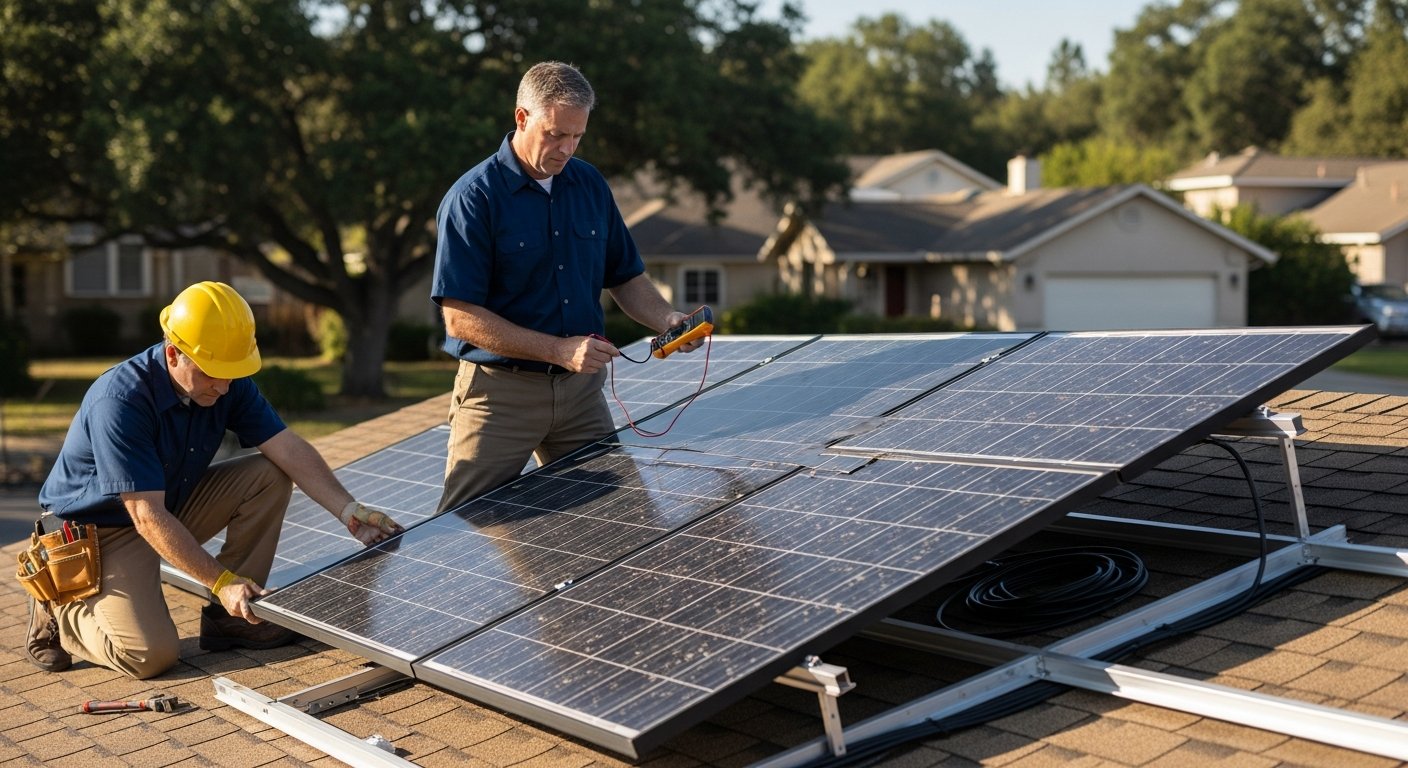
Solar Panel Lifespan: How Long They Really Last
A typical solar panel system lasts 25 to 30 years with minimal upkeep. Learn how degradation works and how to maximize your solar panel lifespan.
By Scott Thompson
Learn more about Solar Panel Installation and Repair for guides, costs, and what to expect.
Compare Solar Panel Installation and Repair Pros Near You

Enter your ZIP code to compare top-rated local professionals and request free quotes.
When you invest in a solar energy system, one of the first questions that comes to mind is simple: how long will this equipment last? It is a fair question, especially when you are committing thousands of dollars to a rooftop project. The short answer is that a quality solar panel system will produce electricity for 25 to 30 years or more. However, the full picture involves a gradual decline in output, not a sudden failure. Understanding the difference between the physical lifespan of the panels and their performance warranty is crucial for anyone considering this renewable energy upgrade.
This guide will break down the expected solar panel lifespan, explain the science behind degradation, and show you how to maximize the return on your investment. We will also explore how NewSolarQuotes can help you compare certified installers who understand how to build a system that lasts. With the right knowledge, you can enjoy decades of low-cost, clean electricity without unpleasant surprises.
What Does the 25 Year Warranty Actually Mean?
Most manufacturers offer a 25 year performance warranty, but they rarely promise that the panels will stop working after that date. Instead, this warranty guarantees that the panels will still produce a certain percentage of their original rated output after 25 years. For most modern panels, this figure is between 80% and 87%. In practical terms, your system will keep generating power well past the warranty period, just at a slightly reduced capacity.
It helps to think of the warranty as a floor, not a ceiling. A panel that degrades at the industry standard rate of 0.5% per year will still be operating at roughly 88% efficiency after 25 years. Many premium panels degrade even slower, at around 0.25% per year. This means after a quarter century, they might still produce over 93% of their initial power. The physical equipment, including the glass, frame, and junction box, is often designed to last 40 years or more, but the electrical output is what we measure for warranties.
There is also a separate workmanship warranty, which typically covers the physical product for 10 to 12 years. This protects you against manufacturing defects, delamination, or corrosion. When you request a quote through NewSolarQuotes, you can ask each installer to explain the difference between the product warranty and the performance warranty. This clarity helps you compare offers on an even playing field.
The Science of Solar Panel Degradation
Solar panels do not just stop working one day. They experience a slow, measurable decline in efficiency known as degradation. This is caused by a variety of environmental and material factors. The most common cause is microcracks in the silicon cells, which develop due to thermal cycling (heating and cooling) and mechanical stress from wind or snow loads. Over time, these tiny cracks reduce the pathways for electrons to flow.
Another factor is light-induced degradation (LID), which occurs in the first few hours of sunlight exposure. This initial drop is normal and typically accounts for a 1% to 3% loss in the first year. After that, the degradation rate stabilizes to the long-term linear rate of 0.5% per year or less. Additionally, the encapsulant material that protects the cells can yellow over time, which reduces the amount of light that reaches the silicon. This is why choosing high-quality materials from the start is so important.
The table below illustrates a typical degradation scenario for a 400 watt panel over a 30 year period:
Year 1: 400 W output (after initial LID, roughly 392 W)
Year 10: Approximately 380 W (5% degradation from year 1)
Year 25: Approximately 348 W (13% degradation from year 1)
Year 30: Approximately 338 W (15% degradation from year 1)
As you can see, even after 30 years, the panel is still producing a substantial amount of power. The system does not fail; it simply becomes slightly less productive. For a homeowner, this means your payback period is likely to be met well before the panels lose a significant amount of output.
Factors That Can Shorten or Extend Lifespan
While the math on degradation is fairly standard, real-world conditions can accelerate or slow down the process. Understanding these factors helps you protect your investment and set realistic expectations for your specific location.
- Climate and Temperature: Extreme heat can accelerate degradation. Panels are rated for high temperatures, but prolonged exposure to very hot rooftops can stress the materials. Cooler climates often yield slightly longer lifespans.
- Installation Quality: Poor racking, improper torque on bolts, or damage during installation can create stress points. A certified installer who follows manufacturer guidelines will prevent premature wear.
- Maintenance and Cleaning: Dust, bird droppings, and leaves can create hot spots that damage cells. Regular cleaning, especially in dry climates, helps maintain output and prevents localized overheating.
- Weather Events: Hail, high winds, and heavy snow are the biggest risks to the physical integrity of the panels. While panels are tested to withstand 1 inch hail, severe storms can still cause damage.
By choosing a qualified installer from NewSolarQuotes, you reduce the risk of installation errors. Our partner network focuses on proper mounting and electrical connections, which are the most common sources of premature failure. It is also wise to invest in a monitoring system so you can track daily output and notice any sudden drops in production.
The Difference Between Panels and the Inverter
It is critical to distinguish between the solar panel lifespan and the lifespan of the rest of the system. The inverter, which converts direct current (DC) from the panels into usable alternating current (AC) for your home, has a much shorter life. String inverters typically last 10 to 15 years, while microinverters and power optimizers are often rated for 25 years.
This means you will likely need to replace your central inverter at least once during the life of your solar panels. This is a normal cost of ownership, and it is not a sign of system failure. When budgeting for solar, set aside a small amount for this future replacement. A good rule of thumb is to expect to pay between $1,000 and $2,500 for a new inverter, depending on your system size.
Batteries, if you choose to add them, have an even shorter lifespan. Most lithium-ion batteries carry a 10 to 15 year warranty. They are a fantastic addition for backup power and time-of-use savings, but they are not a lifetime investment like the panels themselves. When you get a quote, ask the installer to provide a projected timeline for inverter and battery replacement so you can plan your finances accordingly.
How to Maximize Your System's Lifespan
You have significant control over how well your system ages. A little proactive care can go a long way toward ensuring your panels hit or exceed their 30 year potential. The first step is choosing the right equipment, but the next steps involve how you treat that equipment after installation.
First, establish a cleaning schedule. In most areas, rainfall is enough to keep panels relatively clean. However, in dusty regions or areas with heavy pollen, you may need to hose them down a few times a year. Avoid using abrasive tools or harsh chemicals. A soft brush and plain water are usually sufficient. Second, keep an eye on your production data. Most monitoring apps will alert you to a significant drop in output, which can indicate a wiring issue or a failing panel.
Third, schedule an annual inspection with a qualified technician. They can check the racking bolts, inspect the wiring for rodent damage, and ensure the inverter vents are clear. These small checks can prevent minor issues from becoming major repair bills. Finally, trim any nearby trees that cast shade on your roof. Shading not only reduces output but can also cause thermal stress on the shaded cells, accelerating degradation.
Following these steps is simple. Most system owners spend less than two hours per year on maintenance. The reward for this small effort is decades of reliable, clean energy.
What Happens After 30 Years?
After three decades, your panels will still be producing electricity, but you might start considering an upgrade. The technology in 30 years will be significantly more efficient than what is available today. Panels in 2055 might produce twice as much power per square foot as they do in 2026. At that point, it may make financial sense to replace the old array with new, more powerful panels.
However, there is no rule that says you must replace them. Many systems continue running for 35 to 40 years, albeit at reduced capacity. If your panels are still producing enough power to offset your bills, you can simply let them run. The main driver for replacement is usually the inverter or a desire to add capacity, not a catastrophic panel failure.
When the time comes to replace them, solar panels are highly recyclable. The aluminum frame and glass are easy to recover, and the silicon cells can be processed to extract valuable materials. This ensures that your old equipment does not end up in a landfill, keeping the entire solar lifecycle sustainable.
The Financial Impact of Longevity
The long lifespan of solar panels is the foundation of the financial case for going solar. When you calculate the cost per kilowatt-hour over a 30 year period, solar becomes incredibly cheap. A typical system might cost between $15,000 and $25,000 after incentives. If that system produces 10,000 kWh per year, it will generate roughly 300,000 kWh over its lifetime. That works out to a cost of between $0.05 and $0.08 per kWh, which is far below the average utility rate.
This long-term perspective is why solar is considered a stable investment. Unlike a car that depreciates quickly, a solar array provides value for decades. It also increases your home's resale value. Studies have shown that homes with solar panels sell for more than comparable homes without them. Buyers are willing to pay a premium for a home with low, predictable energy costs.
To get the most accurate financial picture, you should use a cost calculator and compare quotes. NewSolarQuotes offers a free quote request service that connects you with certified installers in your area. This allows you to compare equipment quality and pricing side by side, ensuring you choose a system that will last and perform well for the next three decades.
Choosing a System Built to Last
Not all solar panels are created equal. While most major manufacturers offer similar 25 year warranties, the build quality can vary. Look for panels with a strong frame, a robust glass surface, and a proven track record in the field. Brands like Q CELLS, REC, and Panasonic are known for their durability and low degradation rates. Tier 1 manufacturers typically have more rigorous testing standards.
It is also important to consider the warranty backing. Some companies have been in business for decades, while others are newer. A warranty is only as good as the company behind it. Check the manufacturer's financial stability and their history of honoring claims. Your installer can provide this information, and you can also research it yourself.
When you request a quote through NewSolarQuotes, you can specify your preference for premium equipment. Our network includes installers who offer both standard and premium options. They can explain the trade-offs between cost and longevity, helping you choose the right balance for your budget. Remember, the cheapest upfront option is not always the best value over 30 years.
Pay attention to the degradation rate listed in the product datasheet. A panel with a 0.25% degradation rate will produce significantly more power in year 25 than a panel with a 0.50% rate. Over the entire lifespan, this difference can add up to thousands of kilowatt-hours of additional generation, making the premium panel a better long-term investment.
Getting a Quote for Your Long-Term Investment
Once you understand the solar panel lifespan and what contributes to it, the next step is to get personalized advice for your property. A site assessment from a certified installer is the only way to know exactly how many panels you can fit, what your shading looks like, and what the projected output will be. This data is essential for calculating your true payback period.
NewSolarQuotes simplifies this process by connecting you with up to three qualified installers in your region. You will receive detailed quotes that include equipment specifications, warranty terms, and total costs. This allows you to compare not just the price, but the quality and longevity of the components being offered. Our service is free and carries no obligation, making it an easy first step.
We also have comprehensive guides on financing options, including cash purchases, loans, and leases. Understanding how each option affects your long-term return is vital. For example, buying with cash maximizes your lifetime savings, while a low-interest loan allows you to start saving immediately with little upfront capital. Our educational content helps you weigh these choices confidently.
Taking the time to research and compare quotes now will pay dividends for the next 30 years. A high-quality system installed by a certified professional is the best way to ensure you get the full lifespan out of your investment. Start your journey today by getting a free quote and taking control of your energy future.
Learn more about Solar Panel Installation and Repair for guides, costs, and what to expect.
Compare Solar Panel Installation and Repair Pros Near You
Enter your ZIP code to compare top-rated local professionals and request free quotes.