
Understanding Solar Easements: Protecting Home Sunlight Access
Solar easements protect your home sunlight access and safeguard your solar investment. Call 8332123715 to explore your options with trusted pros.

By Amelia Griffin
Learn more about Solar Panel Installation and Repair for guides, costs, and what to expect.
Compare Solar Panel Installation and Repair Pros Near You
Enter your ZIP code to compare top-rated local professionals and request free quotes.
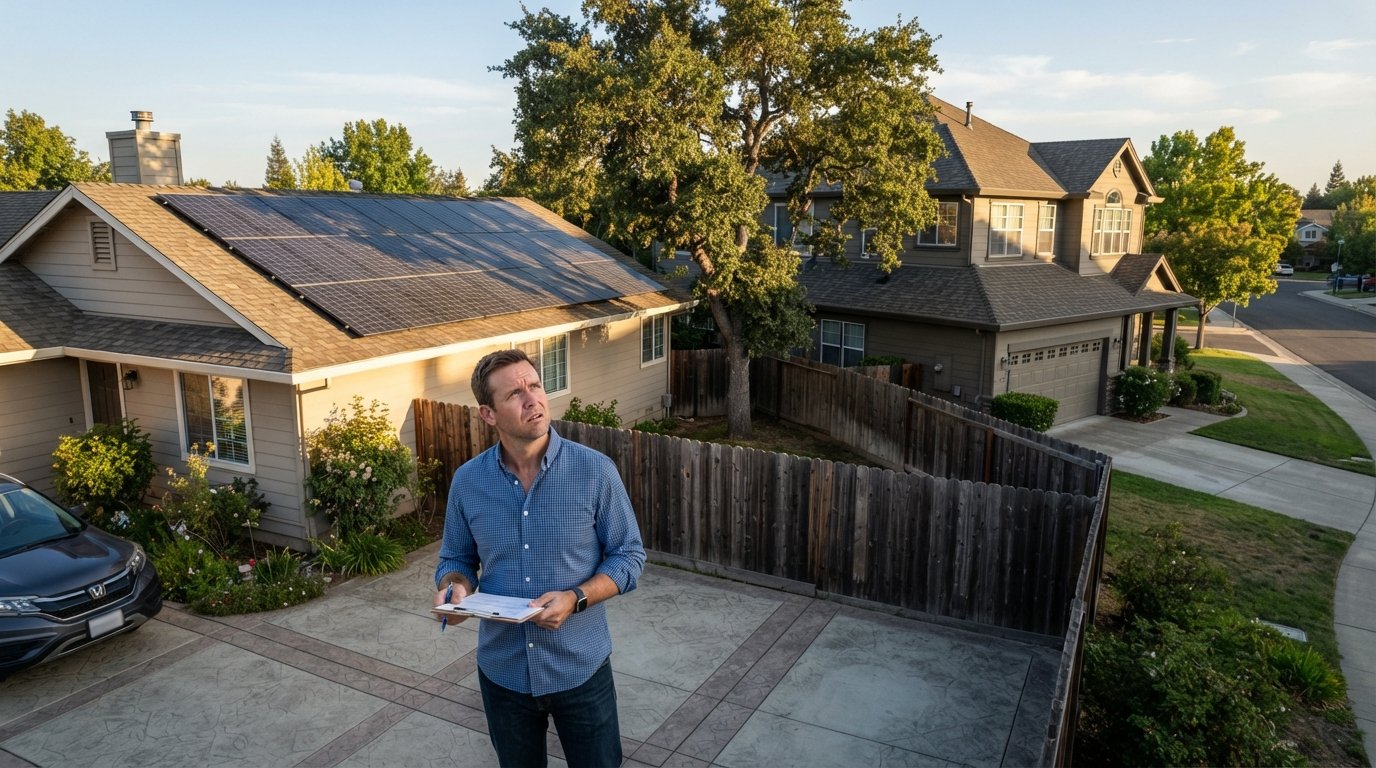
Imagine investing $30,000 in a rooftop solar array, only to watch your neighbor's new two-story addition cast a shadow that slashes your energy production by 40 percent. For a growing number of American homeowners, this scenario is not hypothetical. As residential solar adoption accelerates across the United States, the question of who owns the sunlight falling on a property has moved from a legal footnote to a mainstream concern. Understanding solar easements protecting home sunlight access is now essential for anyone who has installed panels, plans to install them, or is buying a home with an existing system. This guide explains how these legal instruments work, when you need one, how to obtain it, and what happens when disputes arise.
What Is a Solar Easement and Why Does It Matter?
A solar easement is a legally binding agreement that guarantees a property owner's right to receive sunlight across a neighboring property. It is a form of negative easement, meaning the burdened neighbor agrees not to do something, specifically, not to block the sun with structures, trees, or other obstructions. In most U.S. states, solar easements are created through written contracts that must be recorded with the county clerk or land records office to be enforceable against future owners of the burdened property.
The concept matters because property law in the United States generally does not protect access to sunlight by default. Unless a specific statute, covenant, or easement exists, a neighbor can typically build or plant whatever local zoning allows, even if it destroys your solar production. For homeowners who have financed a solar system through a loan or lease, losing sunlight access can mean paying for equipment that no longer delivers the expected return.
Solar easements fill this gap by creating a private legal right. They are distinct from solar access laws, which are state or municipal statutes that may protect solar users to varying degrees. Easements are negotiated between private parties, while access laws are imposed by government. Many states have both, and the strongest protection often comes from combining a recorded easement with favorable local ordinances.
It is also worth distinguishing a solar easement from a solar lease or power purchase agreement. Those are financial arrangements for the solar equipment itself. A solar easement is a property right that runs with the land. If you sell your home, the easement typically transfers to the new owner, preserving the value of the solar installation. For a broader look at how system costs interact with property decisions, see our breakdown of the solar system cost breakdown for homeowners, which explains how soft costs and legal considerations factor into your total investment.
Why Solar Easements Are Becoming More Important
Several trends are converging to make solar easements a practical necessity rather than a legal curiosity. First, residential solar capacity in the U.S. has grown dramatically over the past decade, with millions of rooftops now hosting photovoltaic systems. As density increases, so does the potential for shading conflicts. Second, urban infill and accessory dwelling unit (ADU) construction are adding height and mass to lots that were previously low-rise, increasing the risk of new shadows.
Third, many homeowners now finance solar through 20- to 25-year loans or leases. A shading event in year five can undermine the entire financial model. Lenders and leasing companies increasingly ask whether a property has solar access protection before approving projects in dense neighborhoods. Fourth, state-level renewable portfolio standards and net metering policies have made solar economically attractive in more jurisdictions, which means more systems, more installations, and more neighbors who might not have considered shading impacts.
Finally, climate-driven tree growth and wildfire recovery replanting can change shade patterns over time. A tree that was six feet tall when your panels went up may be 30 feet tall a decade later. A solar easement that addresses vegetation, not just structures, provides more durable protection.
Key Elements of a Well-Drafted Solar Easement
A solar easement that is vague or incomplete is almost as bad as no easement at all. Courts are reluctant to enforce agreements that do not clearly define the rights and obligations of each party. Before signing anything, ensure the document includes the following components. Each of these elements should be reviewed by a qualified real estate attorney licensed in your state.
- Description of the solar energy system: Identify the specific equipment, its location on the property, and its rated capacity. This prevents disputes about whether a later-expanded array is covered.
- Defined sunlight window: Specify the hours of the day and months of the year during which sunlight access is guaranteed. Most easements focus on the critical solar window of 9 a.m. to 3 p.m., when production is highest.
- Measured sky space: Describe the three-dimensional volume of airspace that must remain unobstructed, often expressed in degrees of elevation from the solar panel plane.
- Duration and transferability: State whether the easement runs in perpetuity or for a fixed term, and confirm that it binds heirs, successors, and assigns.
- Remedies and enforcement: Explain what happens if the easement is violated, including injunctive relief, damages, or cost recovery for restoration of sunlight access.
Beyond these core elements, a strong easement may also address vegetation management, including which party is responsible for trimming trees and who pays for it. It may include provisions for minor shading caused by temporary structures such as scaffolding during renovations. Some easements include a right of entry so the solar owner can inspect the burdened property to verify compliance.
Recording the easement is not optional. An unrecorded easement may be binding between the original parties but will not bind a subsequent purchaser of the burdened property who had no notice of it. Recording with the county register of deeds or equivalent office puts the world on constructive notice and ensures the easement survives a sale, foreclosure, or inheritance.
How to Obtain a Solar Easement: A Step-by-Step Process
Negotiating a solar easement requires diplomacy as much as legal skill. Most neighbors are willing to cooperate when they understand the request and see it as a reasonable, limited restriction rather than an open-ended burden. The following sequence reflects common practice, though every situation is unique.
- Assess your actual shading risk: Use solar modeling software or a site assessment to determine whether a neighbor's existing or potential structures and trees would materially reduce production. Not every property needs an easement.
- Research state and local law: Some states, including California, Wisconsin, and Massachusetts, have solar access statutes that provide baseline protections. Knowing your default rights strengthens your negotiating position.
- Approach the neighbor early and respectfully: Explain your solar plans, share production data, and propose a narrow easement that addresses only the specific sky space you need. Avoid demanding blanket restrictions on their property.
- Negotiate terms and consider compensation: Some neighbors will agree for free, especially if they support renewable energy. Others may want a one-time payment, a reciprocal easement, or help with tree maintenance costs.
- Have an attorney draft or review the document: Templates exist, but solar easements are state-specific and fact-specific. A lawyer ensures the language is enforceable and properly recorded.
- Record the easement: File the signed document with the appropriate county office and obtain a recorded copy for your records. Provide a copy to your solar installer and lender if applicable.
Timing matters. It is far easier to obtain an easement before construction begins than after a dispute has erupted. If you are buying a home with solar, ask the seller whether any easements exist and request copies during due diligence. If you are building a new home, consider negotiating easements with adjacent landowners during the planning phase, when goodwill is highest.
For homeowners who want professional guidance on the broader solar process, including how to compare installers and understand incentives, resources such as FreeSolarPowerQuotes can connect you with vetted providers who understand local requirements, including solar access considerations.
When Easements Are Not Enough: Disputes and Remedies
Even with a recorded easement, disputes can arise. A neighbor may claim they did not know about the easement, or may argue that a new structure falls outside its terms. In these situations, the solar owner typically has several options. The first is informal negotiation, often with the help of a mediator. The second is a demand letter from an attorney, which can resolve many disputes without litigation. The third is a lawsuit seeking an injunction to remove the obstruction or damages for lost production.
Courts generally enforce clear solar easements, but they are reluctant to grant injunctions that require demolition of a structure unless the easement is unambiguous and the violation is material. This is why precise drafting matters. An easement that says "neighbor shall not block sunlight" is far weaker than one that specifies exact hours, angles, and remedies.
In the absence of an easement, homeowners may still have recourse under state solar access laws, local zoning ordinances, or private covenants. Some states recognize the doctrine of prior appropriation for solar access, which gives priority to the first user. Others have enacted shade control statutes that require tree owners to share trimming costs when vegetation blocks a solar system installed before the tree reached a certain height. These protections vary widely, so local research is essential.
Insurance is another consideration. Standard homeowner policies do not cover lost solar production due to shading. Some solar-specific warranties exclude shading-related underperformance. An easement, combined with proper system monitoring, is the most reliable way to protect your investment.
Solar Easements and Property Value
A recorded solar easement can be a selling point when you list your home. It signals to buyers that the solar system's production is legally protected, which supports the premium often associated with solar-equipped properties. Appraisers increasingly recognize solar easements as a value-preserving feature, particularly in markets where solar is common and shading conflicts are known.
Conversely, a solar system without easement protection may be viewed as a risk. Buyers and their agents may discount the value of the system if they perceive a threat from future neighboring construction. If you are selling, gather all easement documents and include them in your disclosure package. If you are buying, make easement verification part of your inspection contingency.
For commercial properties, solar easements can be even more consequential. A warehouse or office building with a large rooftop array may depend on unobstructed sunlight for a significant portion of its energy budget. Easements negotiated with adjacent property owners can lock in those savings for decades.
It is also worth noting that easements can be modified or terminated by mutual agreement. If a neighbor later wants to build in a way that conflicts with the easement, they may offer to purchase a release or relocate the easement. These negotiations should always be documented in writing and recorded.
Practical Takeaways for Homeowners
Solar easements are not a niche legal topic. They are a practical tool for protecting one of the most important financial and environmental investments a homeowner can make. As solar penetration increases and neighborhoods evolve, the likelihood of shading conflicts will only grow. Taking proactive steps now can save years of frustration and tens of thousands of dollars in lost production.
If you are planning a solar installation, ask your installer whether they assess shading risk and whether they recommend an easement. If you already have solar, review your property records to see whether any easement exists. If not, consider whether one is worth pursuing with your neighbors. And if you are buying or selling a home with solar, make easements part of the conversation.
The transition to renewable energy is one of the defining trends of this decade. Protecting your access to sunlight is not just a legal formality, it is a cornerstone of making that transition financially sustainable. With the right information and a bit of planning, you can ensure that your solar investment delivers the savings and independence it promised.