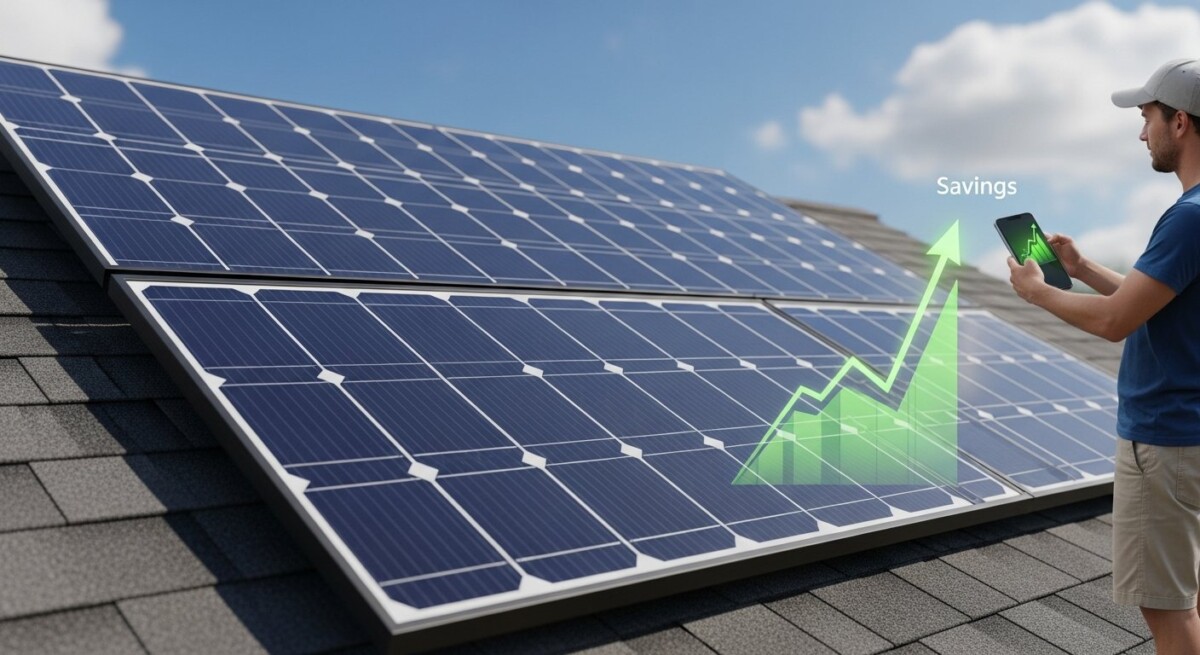
Every month, you open your electricity bill and wonder where all that money goes. Rising energy costs are pushing more homeowners to search for what is solar panel efficiency rating and whether switching to solar can finally reduce those monthly expenses. The idea of generating your own power and becoming less dependent on the grid sounds appealing, but the technical details can feel overwhelming. Understanding solar panel efficiency is the first step toward making a smart investment that pays off for years to come.
Understanding what is solar panel efficiency rating
Simply put, a solar panel efficiency rating tells you how much sunlight the panel can convert into usable electricity. If a panel has a 20% efficiency rating, it converts 20% of the sunlight that hits it into power,the rest is lost as heat or reflected away. Higher efficiency means you generate more electricity from the same amount of sunlight, which is especially important if you have limited roof space.
Solar panels work by using photovoltaic cells to absorb photons from sunlight and release electrons, creating an electric current. The efficiency rating depends on the quality of the cells, the materials used, and the panel design. Monocrystalline panels, for example, typically offer higher efficiency ratings than polycrystalline or thin-film panels, making them a popular choice for homeowners who want maximum power output per square foot.
More homeowners are considering solar because efficiency ratings have improved dramatically over the past decade. Panels that were 15% efficient a few years ago now reach 22% or higher, meaning you can generate more power with fewer panels. This improvement has made solar a practical option for more homes, even those with smaller or partially shaded roofs.
How efficiency affects your energy savings
A higher efficiency rating directly translates to greater energy production per panel, which can lower the number of panels you need and reduce installation costs. For example, a 400-watt panel with 22% efficiency produces more power than a 350-watt panel with 18% efficiency, even if both panels are the same physical size. Over the 25- to 30-year lifespan of a typical solar system, that difference adds up to thousands of dollars in saved electricity bills.
Why Solar Energy Is Becoming More Popular
Electricity prices have risen steadily across the United States, and many homeowners are tired of unpredictable rate hikes. Solar energy offers a way to lock in a lower, more predictable energy cost while protecting yourself from future increases. When you own your solar panels, your monthly electricity bill shrinks dramatically, and in some cases, you may owe nothing at all.
Environmental concerns also play a major role. Solar power produces clean, renewable energy without releasing carbon dioxide or other pollutants into the air. Reducing your home’s carbon footprint feels good, and it’s a tangible way to contribute to a healthier planet for your children and grandchildren. The combination of financial and environmental benefits makes solar an increasingly attractive choice.
Long-term savings are the real driver for most homeowners. The average solar system pays for itself in 6 to 10 years, after which the electricity it generates is essentially free for the remaining life of the system. With federal tax credits, state incentives, and net metering programs, the upfront cost becomes much more manageable, and the return on investment is hard to ignore.
If you are considering solar power for your home, comparing installation quotes can help you understand your options. Request a free solar quote or call to learn more.
Common Questions Homeowners Have About Solar
Most homeowners worry about the upfront cost of installation, but financing options like solar loans, leases, and power purchase agreements make it accessible to nearly any budget. The federal solar tax credit allows you to deduct 30% of your system cost from your federal taxes, and many states offer additional rebates that further lower the price.
Roof suitability is another frequent concern. Your roof needs to be in good condition, have enough unshaded area, and face the right direction,typically south in the northern hemisphere. A professional installer will evaluate your roof during a home energy assessment and recommend the best placement for maximum efficiency.
System performance depends on your location, panel orientation, and local weather patterns. Solar panels still produce electricity on cloudy days, just at a reduced rate. Modern systems also include monitoring software that lets you track how much power you’re generating in real time, so you always know exactly what your system is doing.
- How much will solar panels cost for my home?
- Will solar panels work on my roof?
- How long do solar panels last?
- What happens if my panels produce more power than I use?
- Do solar panels require maintenance?
How Solar Panel Installation Works
The installation process starts with a home energy assessment, where an installer reviews your electricity usage, roof condition, and sunlight exposure. They design a custom system that matches your energy needs and fits your property. Once you approve the design, the installer handles all the permits and approvals required by your local utility and municipality.
Actual panel installation usually takes one to three days, depending on the system size and roof complexity. The crew mounts the panels, connects the wiring, and installs the inverter that converts direct current (DC) power into alternating current (AC) power for your home. After a final inspection by local authorities, the system is activated, and you start generating your own electricity.
- Home energy assessment and system design
- Permits and approvals from local authorities
- Panel and inverter installation
- Electrical connection and wiring
- Final inspection and system activation
Speaking with experienced installers can help you determine the best solar solution for your home. Compare solar quotes here or call to explore available options.
Signs Your Home May Be Ideal for Solar
Homes with strong, consistent sunlight exposure are prime candidates for solar panels. If your roof faces south and receives direct sunlight for most of the day, you’ll get the highest energy production and the fastest payback period. Even east- or west-facing roofs can work well, though total output may be slightly lower.
If your monthly electricity bills are high, solar can provide immediate relief. Homes that use 800 kWh or more per month often see the greatest savings, especially in states with high electricity rates. Additionally, if you plan to stay in your home for at least five to seven years, the long-term savings will easily outweigh the initial investment.
- South-facing roof with minimal shading
- High monthly electricity bills
- At least 300 square feet of suitable roof space
- Plans to stay in your home for 5+ years
- Good roof condition with 10+ years of life remaining
What Affects Solar Installation Costs
System size is the biggest factor in determining cost. A larger system that covers 100% of your electricity needs will cost more upfront but generate greater long-term savings. Equipment quality also matters,premium panels with higher efficiency ratings cost more per panel but produce more power over their lifetime, which can lower your overall cost per kilowatt-hour.
Installation complexity can drive up labor costs. A simple, single-story roof with standard shingles is faster and cheaper to install than a steep, multi-story roof with tiles or slate. Local incentives and rebates can significantly reduce your out-of-pocket expense. The federal tax credit alone knocks 30% off the total system cost, and many states, utilities, and municipalities offer additional programs that make solar even more affordable. For more details on how specific components affect performance, see our guide on the benefits of a solar panel mounting pole.
The cost of solar installation varies depending on your home and energy needs. Request personalized solar quotes or call to see what options are available.
Tips for Choosing a Reliable Solar Installer
Choosing the right installer is just as important as choosing the right panels. A reputable installer will conduct a thorough site assessment, explain your options clearly, and provide a transparent quote that includes all costs. They should also handle all permits, inspections, and utility paperwork, so you don’t have to worry about the details.
Warranties are another critical factor. Look for a panel warranty of at least 25 years and a workmanship warranty of 10 years or more. Reading customer reviews on platforms like Google, Yelp, and the Better Business Bureau can give you insight into an installer’s reliability and customer service. Always compare multiple quotes to ensure you’re getting competitive pricing and the best system for your home.
- Review installer experience and certifications
- Check panel and workmanship warranties
- Read customer reviews and testimonials
- Compare at least three quotes before deciding
- Ask about financing options and incentives
Long-Term Benefits of Installing Solar Panels
Lower electricity bills are the most immediate benefit, but the savings compound over time. With a typical system lasting 25 to 30 years, you can save tens of thousands of dollars on electricity over its lifetime. As utility rates rise, your solar panels become even more valuable, protecting you from inflation and rate hikes.
Installing solar panels also increases your home’s resale value. Studies have shown that homes with solar systems sell for a premium compared to similar homes without solar, and they often sell faster. Buyers recognize the long-term savings and energy independence that come with an owned solar system. Plus, every kilowatt-hour you generate from the sun reduces your reliance on fossil fuels and lowers your environmental impact. If you’re curious about smaller applications, you can read about whether 20W solar panels are efficient for small needs.
Frequently Asked Questions
What is a good solar panel efficiency rating?
A good efficiency rating for residential solar panels today ranges from 19% to 22%. Panels above 22% are considered premium and are typically used in space-constrained installations. Most homeowners will be well-served by panels in the 20% to 21% range, which offer an excellent balance of cost and performance.
Do solar panels work in cloudy weather?
Yes, solar panels still generate electricity on cloudy days, though at reduced output,typically 10% to 25% of their rated capacity. Modern panels are designed to capture diffuse sunlight, so you’ll still see production even when the sun isn’t directly shining. Your system will produce the most power on clear, sunny days, but it won’t stop working in overcast conditions.
How long does it take for solar panels to pay for themselves?
The payback period for solar panels typically ranges from 6 to 10 years, depending on your electricity rates, system cost, available incentives, and sunlight exposure. After that point, the electricity your panels generate is essentially free for the remainder of their 25- to 30-year lifespan. In states with high electricity costs and strong incentives, payback can be even faster.
What is the difference between monocrystalline and polycrystalline panels?
Monocrystalline panels are made from a single silicon crystal and have higher efficiency ratings, typically 19% to 22%. Polycrystalline panels are made from multiple silicon fragments and have lower efficiency, usually 15% to 18%. Monocrystalline panels are more expensive but produce more power per square foot, making them ideal for smaller roofs.
Can I install solar panels myself to save money?
While DIY solar installation is possible, it’s not recommended for most homeowners. Professional installers ensure the system is safely wired, properly permitted, and optimized for maximum efficiency. Mistakes can lead to poor performance, electrical hazards, or voided warranties. The cost of professional installation is usually offset by better system performance and access to incentives that require certified installers.
Will solar panels damage my roof?
No, properly installed solar panels should not damage your roof. Professional installers use mounting systems that attach to your roof’s rafters without compromising the waterproofing layer. In fact, panels can protect the roof area underneath them from sun, rain, and snow, potentially extending the lifespan of that portion of your roof.
How much maintenance do solar panels require?
Solar panels require very little maintenance. Rain usually washes away dust and debris, but in dry climates, you may need to hose them off once or twice a year. Most systems come with monitoring software that alerts you to any performance issues, and the inverter and panels are designed to operate reliably for decades with no moving parts to wear out.
What happens if I produce more electricity than I use?
If your system produces more electricity than your home consumes, the excess power is sent back to the grid through a process called net metering. Your utility credits you for that excess power, which you can use to offset future bills. Net metering policies vary by state, but most solar homeowners benefit significantly from this arrangement.
Solar energy is a practical, long-term solution for reducing your electricity bills, gaining energy independence, and helping the environment. Understanding what is solar panel efficiency rating empowers you to choose the right panels and make a confident investment. The best way to ensure you get the most value is to compare multiple installation quotes from trusted professionals. Start exploring your options today and take the first step toward a brighter, more affordable energy future.