
Hail Damage to Solar Panels: Protection and Insurance Guide
Learn how hail affects solar panels, what insurance covers, and how to file a claim. Protect your investment with these expert tips.

By Andy Pearson
Learn more about Solar Panel Installation and Repair for guides, costs, and what to expect.
Compare Solar Panel Installation and Repair Pros Near You

Enter your ZIP code to compare top-rated local professionals and request free quotes.
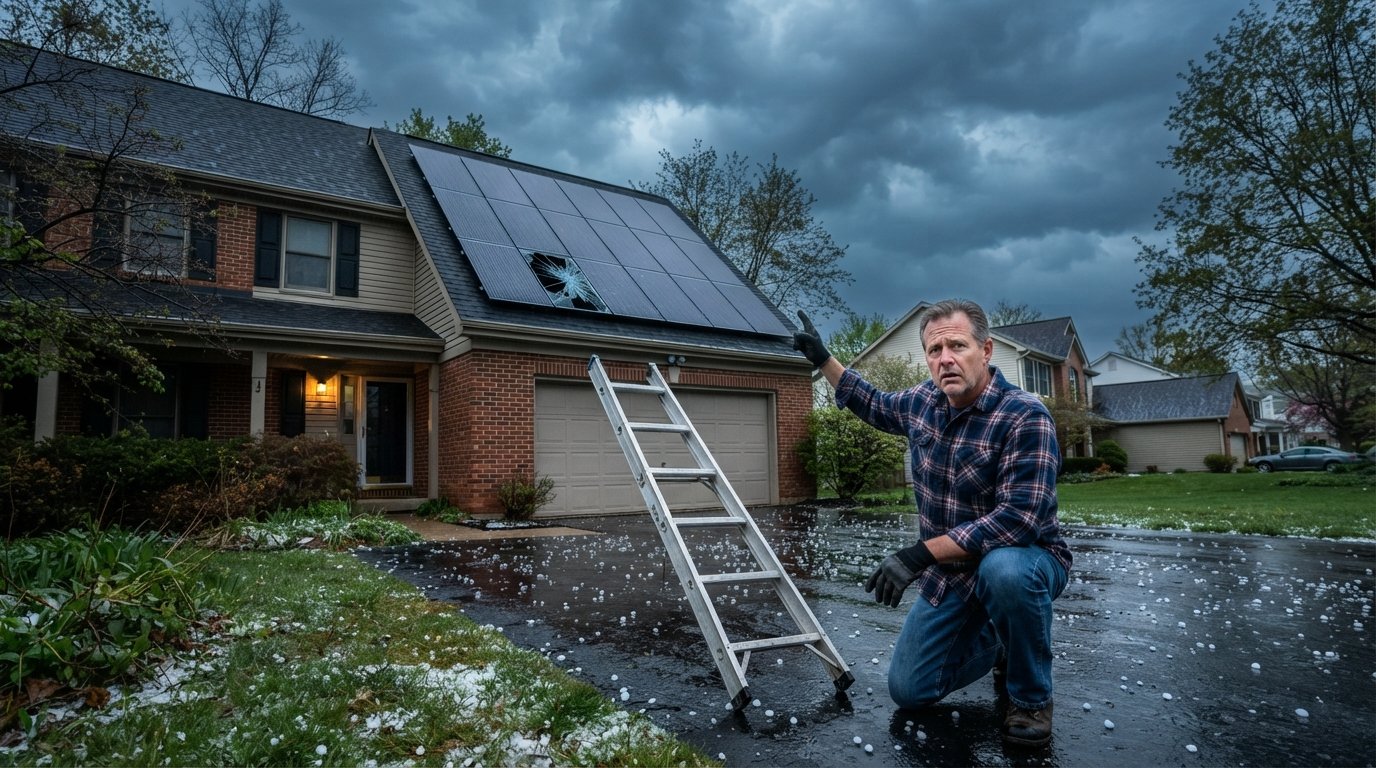
When a hailstorm rolls through, your first thought might be about your roof or your car. But if you have solar panels, they are also on the front line, exposed to the same icy projectiles falling from the sky. The good news is that modern solar panels are built to withstand significant impacts, and comprehensive protection and insurance strategies can keep your investment safe. This guide walks you through how hail affects solar panels, what your insurance policy should cover, and how to file a claim successfully if the worst happens.
How Hail Actually Affects Solar Panels
Solar panels are more durable than many homeowners realize. Most panels on the market today are tested to withstand hailstones up to 1 inch to 1.75 inches in diameter, thanks to rigorous standards like the Underwriters Laboratories (UL) 61730 rating. This means that a typical hailstorm, with stones under 1 inch, is unlikely to cause any damage at all. However, severe storms can produce hail larger than 2 inches, traveling at speeds over 70 mph. In those cases, even the toughest panels can suffer cracks or broken glass.
The most common type of hail damage to solar panels is microcracks in the silicon cells. These tiny fractures may not be visible to the naked eye but can reduce your panel's efficiency over time. Larger impacts can shatter the tempered glass surface, which not only looks bad but also exposes the delicate cells to moisture and debris. In extreme cases, the entire panel may need to be replaced. It is also important to consider the mounting system and wiring, since a severe impact can loosen racking or damage connectors.
Why Panel Quality Matters
Not all solar panels are created equal. Premium panels from manufacturers like LG, Panasonic, and REC use stronger glass and more robust framing, making them more resistant to hail. Budget panels may use thinner glass and less durable cells, increasing the risk of damage. If you are in the market for a new system, ask your installer about the panel's impact rating and warranty coverage. Many Tier 1 manufacturers offer a 25-year product warranty that covers manufacturing defects, but hail damage is typically considered an external event, so it falls under your homeowner's insurance rather than the panel warranty.
Your Insurance Policy: What It Covers and What It Does Not
Most standard homeowners insurance policies cover damage to solar panels under the dwelling or other structures portion of your policy. This includes damage from hail, wind, fire, and lightning. However, there are important nuances. If your panels are mounted on your roof, they are usually covered as part of your dwelling coverage. If they are ground-mounted, they may be considered other structures, which typically have a lower coverage limit, often around 10% of your dwelling coverage. It is critical to review your policy declarations page to see exactly what is covered and at what limits.
Another key consideration is the type of policy you have. A replacement cost policy will pay to replace damaged panels with new ones of similar kind and quality, while an actual cash value policy will deduct depreciation, leaving you with a smaller payout. Since solar panels lose value over time, an actual cash value policy can leave you with a significant out-of-pocket expense. If you have an older system, you may want to check whether your insurer offers replacement cost endorsement for solar equipment.
Deductibles and Special Considerations
Hail damage claims often come with a separate deductible, especially in states prone to severe weather. Some policies have a percentage-based deductible for wind and hail, such as 1% or 2% of your home's insured value. This can be thousands of dollars, so it is wise to know your deductible before you file a claim. If the damage is minor, you might decide it is not worth filing a claim, since even a small claim can raise your premiums. On the other hand, if the damage is extensive, the claim is justified, and you should pursue it fully.
Additionally, if you lease your solar panels or have a power purchase agreement (PPA), the ownership situation changes. In most cases, the leasing company retains ownership and is responsible for insuring the equipment. However, you should have a copy of the lease agreement and contact the leasing company immediately after a storm to report any potential damage. They will handle the claim with their insurer, but you may still need to file a claim with your own insurer for any damage to your roof or property caused by the same storm.
Protecting Your Panels Before the Storm Hits
Prevention is always better than a claim. While you cannot stop hail from falling, you can take steps to minimize the risk of damage. One of the most effective measures is to install a hail protection system, such as a protective mesh or a hail guard, which can be placed over the panels during severe weather. These systems are not standard, but they are available from specialty manufacturers and can be worth the investment if you live in a hail-prone area like Texas, Colorado, or Oklahoma. However, they are not cheap, and they can reduce panel efficiency slightly, so weigh the cost against the likelihood of a severe hailstorm.
Another practical step is to ensure your panels are installed with a proper tilt angle. Panels that are tilted at a steeper angle are less likely to be hit directly by hail, as the stones tend to glance off. This is a design consideration that your installer can address. Additionally, regular inspections can help identify early signs of wear, like small cracks or loose connections, which can be repaired before they become major problems. After a hailstorm, it is wise to visually inspect your panels from the ground or use binoculars, but never climb onto your roof yourself unless you are trained to do so.
Filing a Hail Damage Claim: A Step-by-Step Process
If you discover damage after a storm, follow this process to maximize your chances of a successful claim.
- Document the damage thoroughly. Take photos and videos of every visible crack, shard of glass, or dent. Note the date and time of the storm, and if possible, save a weather report confirming hail in your area.
- Contact your insurance company immediately. Most policies require you to report a claim within a reasonable time frame, often 30 days, but the sooner the better. Provide them with the documentation you have collected.
- Schedule an adjuster visit. The adjuster will inspect the damage, but they may not have detailed knowledge of solar systems. It is helpful to have your solar installer's report on hand, which can serve as an expert opinion.
- Get written estimates from licensed solar contractors. This gives you a clear picture of the repair or replacement cost, and you can submit these to your insurer.
- Do not get repairs done before the adjuster sees the damage. Premature repairs can complicate the claim process.
After the claim is filed, your insurer will either approve it and send a payout, or they may dispute the cause or extent of the damage. If you feel the claim is unfairly denied, you have the right to appeal. You can also hire a public adjuster to negotiate on your behalf, though they typically take a percentage of the settlement. In most cases, however, a well-documented claim with clear evidence will be approved without too much friction.
Maximizing Your Recovery: Tips for a Fair Settlement
To get the full value of your claim, you need to be meticulous. First, ensure that your policy's coverage limits are adequate. If your panels are part of your dwelling coverage, the limit should be enough to replace the entire roof and panels. If you are unsure, call your insurer and ask for a coverage review. Second, keep a detailed inventory of your solar system, including the make, model, and installation date. This information will help the adjuster determine the replacement cost accurately.
Third, do not accept the first offer if it seems low. Insurers often start with a lowball number, expecting you to negotiate. Compare their estimate with the quotes from your solar contractor. If there is a significant gap, send them the contractor's quote and ask for a reassessment. Finally, keep all receipts and invoices from the repair work. If you have to pay out of pocket because the insurer's payout was insufficient, those receipts are your evidence for a supplemental claim.
One often overlooked aspect is the impact of hail damage on your solar panel's performance. Even if the damage is not visible, microcracks can lower energy output by 10% to 20%. If your energy bills increase unexpectedly after a storm, it may be worth having a professional inspection. If the inspector finds hail damage, that is a legitimate claim, even if the panels look fine from the ground.
The Role of Solar Insurance and Extended Warranties
In addition to your homeowners policy, you may want to consider a separate solar insurance policy or an extended warranty that covers weather-related damage. Some solar installers offer performance guarantees that cover a minimum energy output, but these rarely cover hail damage. Specialized solar insurance policies, such as those offered by SolarEnergy.ai partners, can provide coverage for equipment damage, business interruption, and even liability if you are a solar business. For homeowners, these policies are less common, but they can be a worthwhile add-on if you live in a high-risk area.
If you are considering a new solar installation, check the warranty terms carefully. Most panels have a 25-year performance warranty, but the workmanship warranty from the installer is often only 5 to 10 years. This workmanship warranty covers installation errors, not hail damage, but it is still important to have a reliable installer who will stand behind their work. You can use the solar panel selection tool to compare options and find a system that balances durability, cost, and warranty coverage.
State-Specific Considerations for Hail-Prone Areas
If you live in a state like Texas, Colorado, or Nebraska, you know that hailstorms are a fact of life. In these areas, insurance premiums can be higher, and deductibles for hail damage are often more substantial. Some states have enacted laws that limit the use of percentage deductibles for hail, so it is worth checking your state's insurance regulations. Additionally, some insurers may require you to have a certain roof type, such as impact-resistant shingles, to qualify for a discount. If your roof is older, you may not be able to get coverage for your solar panels at all, since the roof itself is a higher risk.
In other regions, like the Pacific Northwest or the Northeast, hail is less common, but it can still occur. Even if you are not in a high-risk area, it is still wise to have adequate coverage. The cost of adding solar panels to your policy is usually minimal, often less than $100 per year, but the benefit is substantial. Without coverage, a single hailstorm could cost you tens of thousands of dollars in repairs, which would wipe out years of energy savings.
Hail damage to solar panels is a real risk, but with the right protection and insurance, it is a manageable one. By understanding your policy, taking preventive measures, and knowing how to file a claim, you can ensure that your solar investment remains safe and profitable for decades. After a storm, always inspect your system, document any damage, and contact your insurer promptly. And if you are shopping for a new system, prioritize durability and warranty coverage, so you can enjoy the benefits of solar energy with peace of mind. SolarEnergy.ai