How to Fix Common Home Solar Panel Problems Fast
Learn how to troubleshoot common solar panel issues at home, from inverter errors to dirty panels, and restore your system's efficiency quickly.
By Scott Thompson
Learn more about Solar Panel Installation and Repair for guides, costs, and what to expect.
Compare Solar Panel Installation and Repair Pros Near You
Enter your ZIP code to compare top-rated local professionals and request free quotes.
Your solar panels are silent workhorses, but when they underperform, the silence can feel deafening. A sudden spike in your electric bill or a drop in system output often signals a fixable issue, not a catastrophic failure. This guide walks you through troubleshooting common solar panel issues at home, from simple DIY checks to knowing when to call a professional. You will learn how to diagnose problems safely, restore your system's efficiency, and avoid costly surprises.
Why Your Solar System Might Be Underperforming
Solar panels have no moving parts, which makes them incredibly reliable, but they are not immune to problems. The most common symptom is a decrease in energy production. Before you assume the worst, remember that output naturally fluctuates with weather, season, and time of day. However, a consistent drop over several days or weeks warrants investigation.
Another frequent issue is a sudden increase in your utility bill despite normal sunlight. This usually points to a problem with your inverter, wiring, or a tripped breaker. In many cases, the root cause is something you can spot and fix yourself, saving you the cost of a service call. For more complex electrical or panel issues, professional help is essential.
Step-by-Step Troubleshooting Guide
Follow these steps in order to systematically identify the problem. Always start with the simplest checks before moving to more technical ones.
1. Check Your Monitoring System
Most modern solar systems include a monitoring app or web portal. This is your first stop. It shows real-time production, historical data, and often error codes. Compare today's output to a similar sunny day from a week or month ago. If the numbers are significantly lower, you have a real issue. If the system shows zero production, the problem is likely with the inverter or the grid connection.
2. Inspect the Inverter
The inverter is the brain of your solar system, converting DC power from panels into AC power for your home. It usually has indicator lights. A solid green light means everything is normal. A blinking green light might indicate a communication issue. A red or orange light, or no light at all, signals a problem.
- Error codes: Check your inverter's manual or display for specific codes. Many are simple to reset.
- Tripped breaker: Look at your main electrical panel and the inverter's AC disconnect. Reset any tripped breakers.
- Switch position: Ensure the inverter's DC and AC switches are in the "on" position.
If your inverter shows a persistent error, try a hard reset. Turn off the inverter, wait 30 seconds, then turn it back on. This clears many temporary faults. If the error returns, you likely need a professional repair or replacement.
3. Examine Your Panels for Physical Damage
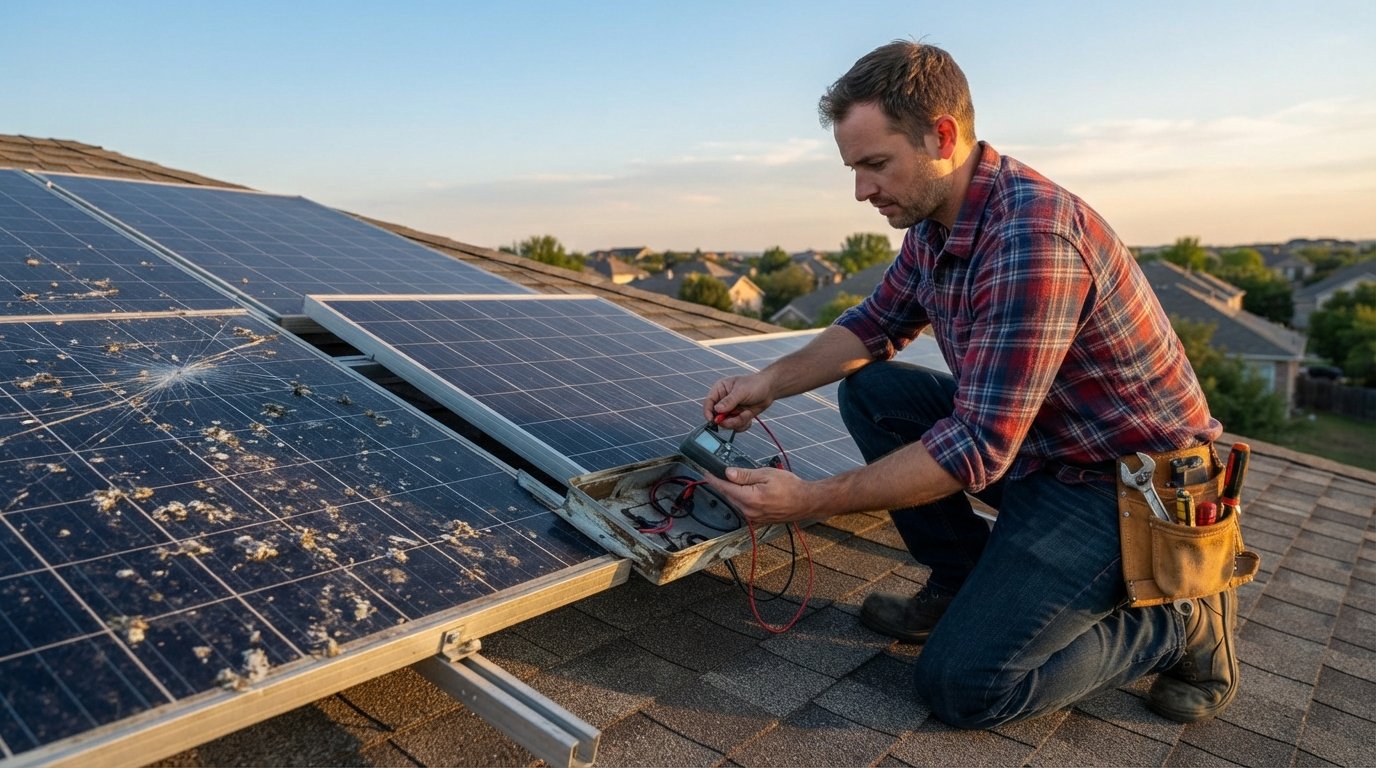
Walk around your property and visually inspect your panels. Look for cracks, chips, or discoloration on the glass surface. Check for loose or exposed wiring. Also, look for signs of water intrusion, such as rust or corrosion around the frames. Physical damage can reduce output or create safety hazards.
Bird droppings, leaves, and dirt can also block sunlight. While you cannot always see this from the ground, heavy soiling is a common cause of reduced production. If you notice significant buildup, it may be time for a professional cleaning.
4. Check the Meter and Utility Connection
Your net meter records the electricity you produce and consume. If it is not spinning or displaying correctly, your utility might not be crediting you properly. Also, check if your utility has issued a general outage or maintenance notice in your area. Sometimes the issue is on their end, not yours.
5. Review Your Recent Energy Usage
Is it possible your home is using more electricity than usual? A new appliance, a pool pump running longer, or a change in your family's habits can offset solar production. Compare your usage patterns to previous months. This helps you determine if the problem is with production or consumption.
When to DIY and When to Call a Pro
You can safely handle basic checks like reading error codes, resetting breakers, and visual inspections. However, any work involving wiring, panel removal, or roof access should be left to certified professionals. Solar panels generate high voltage DC electricity, which is dangerous. Never open the inverter or junction boxes unless you are trained.
If you cannot identify the issue after completing the steps above, or if you find physical damage, it is time to contact a certified installer. They have specialized tools to test individual panels and diagnose complex issues. Attempting advanced repairs yourself can void your warranty and create safety risks.
Preventive Maintenance to Avoid Future Problems
The best way to handle solar issues is to prevent them. A little proactive care goes a long way. Most solar panels require minimal maintenance, but a few habits can extend their lifespan and keep them efficient.
- Clean panels annually: In dry or dusty climates, cleaning every six months is better. Use a hose and a soft brush with soapy water.
- Trim nearby trees: Overhanging branches can drop leaves and create shade, which significantly reduces output.
- Schedule professional inspections: Have a certified technician check your system every 2 to 3 years for loose connections and wear.
These simple steps can help you avoid the most common causes of reduced performance. They also give you a chance to spot minor issues before they become major repairs.
Understanding Inverter Errors and Alarms
Inverter error codes are your system's way of telling you what is wrong. Familiarize yourself with the most common ones for your inverter brand. For example, some codes indicate grid voltage issues, while others point to insulation faults or high temperatures. Many of these can be resolved with a reset, but persistent codes require professional diagnosis.
If your inverter is old, it might simply be nearing the end of its lifespan. Most string inverters last 10 to 15 years, while microinverters can last 25 years. Replacing an inverter is a significant expense, but it is often necessary to restore full production. In our guide on finding the best solar panel selection tool, we explain how to evaluate new equipment when upgrades are needed.
Addressing Panel Soiling and Shading
Dust, pollen, and bird droppings can create a thin film that blocks sunlight. This is especially common in areas with little rain. While rain helps, it does not always fully clean the panels. If you notice a consistent drop in output after a dry spell, soiling is a likely culprit.
Shading is another major factor. Even a small shadow from a chimney or a tree branch can disproportionately impact output because panels in a string are affected by the lowest-performing cell. If a new tree or structure creates shade, you may need to trim branches or consider adding optimizers or microinverters to mitigate the loss.
The Financial Impact of Ignoring Issues
Ignoring a small problem can lead to bigger ones. A loose connection can cause arcing and damage your inverter or roof. A cracked panel can allow moisture to enter, reducing its lifespan and potentially creating a fire hazard. The longer you wait, the more you lose in reduced savings and the higher the repair cost.
Regular troubleshooting and maintenance protect your investment. By catching issues early, you maximize your system's efficiency and your financial return. For a deeper understanding of how to maximize your savings, exploring resources like FreeSolarPowerQuotes can provide additional insights into system optimization and cost-saving strategies.
Conclusion
Troubleshooting common solar panel issues at home does not have to be intimidating. Start with your monitoring system, check the inverter, and perform a visual inspection. Use your power meter to verify grid connection, and compare your energy usage to rule out changes in consumption. For anything beyond basic checks, call a certified professional to ensure safety and protect your warranty. With a proactive approach, you can keep your solar system running efficiently for decades, maximizing your energy savings and peace of mind.
Learn more about Solar Panel Installation and Repair for guides, costs, and what to expect.
Compare Solar Panel Installation and Repair Pros Near You
Enter your ZIP code to compare top-rated local professionals and request free quotes.