
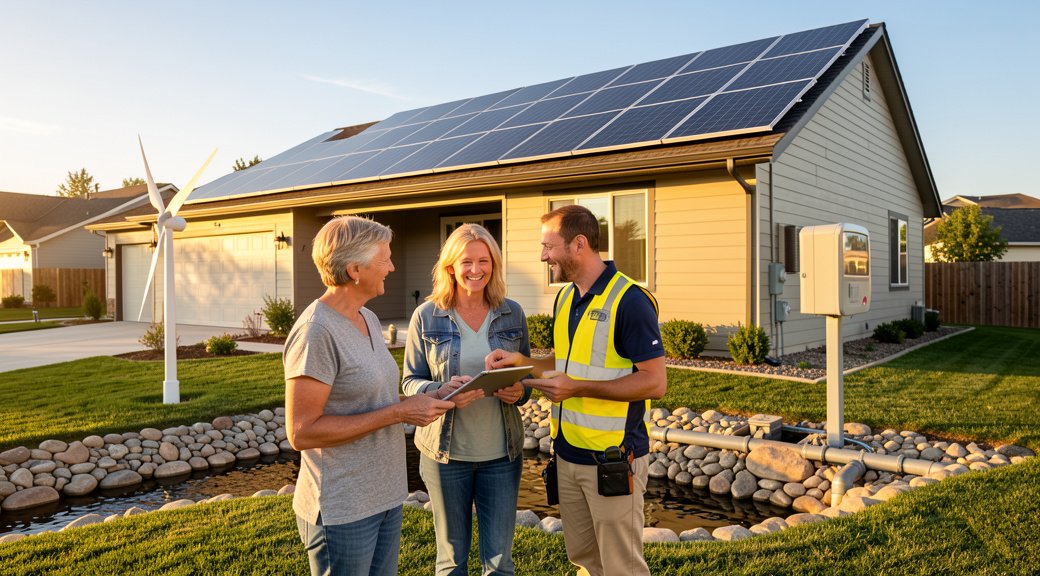
Renewable Energy 2026: Save Money with Solar, Wind, and Water
Discover how renewable energy systems like solar and wind can slash your electricity bills, boost property value, and pay for themselves in years.

By Alex Carter
Learn more about Solar Panel Installation and Repair for guides, costs, and what to expect.
Compare Solar Panel Installation and Repair Pros Near You
Enter your ZIP code to compare top-rated local professionals and request free quotes.
Imagine a home where your electricity meter runs backward, your monthly utility bill shrinks to a fraction of what it once was, and your property value climbs while your carbon footprint shrinks. This is not a distant future; it is the reality for millions of American homeowners and businesses who have switched to renewable energy. With solar panels, wind turbines, and hydropower systems now more affordable and efficient than ever, the question is no longer whether to go green, but how quickly you can start saving. In this comprehensive guide, we will break down the costs, benefits, incentives, and practical steps you need to take to harness these clean power sources, and we will show you how to connect with certified installers who can make the transition smooth and profitable.
Why Renewable Energy Is a Smart Financial Move
Renewable energy is no longer just an environmental statement; it is a sound financial investment. The upfront costs of solar panels, wind turbines, and hydropower systems have dropped dramatically over the past decade, while efficiency and durability have improved. At the same time, electricity rates from traditional utilities continue to rise, making self-generated power increasingly competitive. When you install a solar panel system, you essentially lock in your electricity rate for the next 25 to 30 years, protecting yourself from inflation and price spikes. For businesses, the savings are even more pronounced, because commercial energy demand is higher and often subject to demand charges that renewable systems can offset.
The financial benefits go beyond monthly savings. Renewable energy systems increase property values. Studies have shown that homes with solar panels sell for more than comparable homes without them, and they often sell faster. This is because buyers recognize the long-term savings and the appeal of energy independence. Additionally, many states offer property tax exemptions for renewable energy systems, meaning the increased home value does not automatically lead to higher property taxes. When you combine these factors with federal tax credits and local rebates, the payback period for a typical residential system can be as short as five to eight years, leaving you with decades of nearly free electricity.
To fully understand your potential savings, you need to know your current energy consumption, your local utility rates, and the solar or wind resource in your area. That is why tools like the installation cost calculators and energy savings analysis on NewSolarQuotes are invaluable. They provide personalized estimates based on your zip code, roof orientation, and energy usage, helping you see exactly how much you can save before you ever talk to an installer.
The Three Main Types of Renewable Energy for Homes and Businesses
When most people think of renewable energy, they think of solar panels, and for good reason. Solar is the most accessible and widely adopted technology for residential and commercial properties. Modern photovoltaic panels are highly efficient, can be installed on rooftops or as ground-mounted arrays, and require minimal maintenance. Systems can be designed to cover 50% to 100% of your electricity needs, and with battery storage, you can achieve true energy independence, keeping your lights on during grid outages.
However, solar is not the only option. Wind energy is another viable choice for properties with enough land and consistent wind speeds. Small wind turbines, typically ranging from 1 to 10 kilowatts, can supplement or even fully power a home or farm. Hydropower, though less common for residential use, is a powerful option for properties with a stream or a water source with sufficient flow. Micro-hydro systems can produce electricity 24 hours a day, providing a reliable and consistent renewable energy source that outperforms solar and wind in terms of capacity factor.
Comparing Solar, Wind, and Hydropower
Each technology has its own strengths and ideal use cases. To help you decide, consider these key factors:
- Solar panels: Best for most suburban and urban homes, they work in almost all climates, require no moving parts, and have a long lifespan of 25+ years. They also offer the easiest installation and the most financing options.
- Wind turbines: Ideal for rural or agricultural properties with at least one acre of open land and average wind speeds above 10 mph. They have a higher visual and noise impact but can generate power day and night, especially in winter when solar output is lower.
- Hydropower systems: Perfect for properties with a year-round flowing water source. They are the most consistent and efficient renewable energy option, but they require significant upfront engineering and permitting, and they are site-specific.
In practice, many homeowners choose a hybrid approach, such as solar panels combined with a small wind turbine, to maximize generation across different weather conditions. A professional installer can assess your site and recommend the best combination.
Breaking Down the Costs and Savings
The cost of a renewable energy system varies widely based on the technology, system size, location, and installer. For solar, the average residential installation in the United States costs between $15,000 and $25,000 before incentives, with the final price depending on the number of panels, the type of inverter, and whether you include battery storage. Wind turbines typically cost $3,000 to $8,000 per kilowatt of capacity, so a 5 kW system might run $15,000 to $40,000. Hydropower is the most expensive to develop, often exceeding $20,000 for a small 1 kW system, but it has the lowest operating costs and can last 50 years or more.
The key to affordability is leveraging incentives. The federal Investment Tax Credit (ITC) allows you to deduct 30% of the installed cost from your federal taxes, and this credit is available through 2032. Many states and utilities offer additional rebates, performance-based incentives, and net metering programs that pay you for excess electricity you send to the grid. With these incentives, the net cost of a typical solar system can drop to $10,000 or less, and the monthly savings from your utility bill can make the system cash-flow positive from day one if you finance it.
To give you a clearer picture, here is a simple example. A homeowner in Texas with a 10 kW solar system, priced at $20,000 before incentives, would receive a $6,000 federal tax credit, bringing the net cost to $14,000. If the system offsets $150 in monthly electricity bills, the payback period is just over seven years. After that, the electricity is essentially free. With a 25-year warranty on the panels, this homeowner stands to save over $30,000 in electricity costs over the system's lifetime.
Financing Options: Buy, Lease, or Power Purchase Agreement
Once you have a quote for your system, you need to decide how to pay for it. The three main options are buying outright with cash, financing with a loan, or leasing the system. Buying outright gives you the maximum return on investment, but it requires a significant upfront payment. Solar loans, which are secured or unsecured, allow you to spread the cost over 10 to 20 years, and your monthly loan payment is often lower than the electricity bill you were paying, giving you immediate savings. Leasing and power purchase agreements (PPAs) require little to no upfront cost, and you pay a fixed monthly fee or a per-kilowatt-hour rate for the power the system produces. The downside of leasing is that you do not own the system, so you miss out on tax credits and increased property value.
If you choose to lease or sign a PPA, the installer or a third-party owner receives the tax incentives, and they pass some of those savings to you. This can be an excellent option if you have no tax liability or prefer not to take on debt. However, for most homeowners who plan to stay in their home for more than five years, buying with a solar loan is the most financially rewarding choice. The interest on a solar loan is often tax-deductible as a home improvement loan, and the equity you build adds to your home's value.
It is crucial to compare financing offers from multiple installers and lenders. Look for low annual percentage rates (APRs) and no prepayment penalties. A reputable installer will work with you to find a payment plan that fits your budget and maximizes your savings.
Incentives and Policies: How to Maximize Your Benefits
Renewable energy incentives are available at the federal, state, and local levels, and they can significantly reduce your out-of-pocket costs. The most important is the federal ITC, which covers 30% of the system cost for solar, wind, and hydropower installations. This credit applies to systems installed by the end of 2032, after which it steps down to 26% in 2033 and 22% in 2034. Some states also offer state tax credits, property tax exemptions, and sales tax exemptions on renewable energy equipment. Additionally, net metering policies require utilities to credit you for the excess power your system sends to the grid, effectively storing your surplus energy for later use.
For businesses, there are additional incentives, such as the Modified Accelerated Cost Recovery System (MACRS), which allows you to depreciate the system over five years, and the Section 179 deduction, which can be used for smaller systems. Commercial systems can also qualify for grants from the U.S. Department of Agriculture if they are on farms or in rural areas. To ensure you capture every available incentive, you should consult with a tax professional who specializes in renewable energy, and you can find current state-specific guides on NewSolarQuotes.
One often overlooked benefit is the increase in home resale value. A study by Zillow found that homes with solar panels sell for 4.1% more on average than comparable homes without them. In a market where home prices are already high, that is a significant premium. When you are ready to sell, your renewable energy system becomes a selling point, not a liability, as long as you own the system outright. If you have a lease, you may need to transfer the lease to the new owner, which can be a hurdle, so many sellers choose to buy out the lease before listing.
Choosing the Right Installer and Getting Quotes
Selecting a certified, experienced installer is the most critical step in your renewable energy journey. A poorly installed system can lead to leaks, electrical issues, and a system that underperforms, costing you money and headaches. Start by researching local installers, checking their credentials, and reading customer reviews. Look for certifications from the North American Board of Certified Energy Practitioners (NABCEP), which sets a high standard for solar professionals. Ask for references and visit completed installations if possible.
You should always get multiple quotes from different installers. This allows you to compare prices, equipment choices, and warranties. Be wary of quotes that are significantly lower than others, as they may indicate inferior equipment or workmanship. The best way to streamline this process is to use a quote service like NewSolarQuotes, which connects you with pre-vetted, certified installers in your area. You simply fill out a short form with your address and energy usage, and you receive up to three competitive quotes from local experts. This saves you time and ensures you are dealing with reputable companies.
When reviewing quotes, pay attention to the equipment brand, the warranty terms, and the estimated annual production. A quality installer will provide a detailed proposal that includes a production estimate based on your roof's solar resource. They should also explain the permits and inspections required in your area. Do not hesitate to ask questions and negotiate. Many installers have flexible pricing and can match or beat a competitor's quote.
The Installation Process: What to Expect
Once you have chosen an installer and signed a contract, the installation process typically takes one to three days for a residential solar system, though larger commercial projects can take weeks. The process begins with a site assessment, where the installer measures your roof, checks its structural integrity, and confirms the electrical system can handle the new solar array. They will also submit the necessary permits to your local building department and utility company, a process that can take anywhere from a few days to several weeks.
On installation day, the crew will set up scaffolding, mount the racking system, install the panels or turbine, and connect everything to your electrical panel. They will then work with your utility to install a net meter and to pass inspection. Once the system is approved, you can turn it on and start generating power. Your installer should provide you with a monitoring app that tracks your energy production and usage in real time, so you can see exactly how much you are saving.
Maintenance for renewable energy systems is minimal. Solar panels need to be cleaned occasionally, especially in dusty areas, but rain typically does the job. Wind turbines require annual inspections and occasional lubrication of moving parts. Hydropower systems need to be checked for debris and ice buildup. Your installer will offer a maintenance plan, or you can hire a local technician. With proper care, your system will produce clean energy for decades.
Real-World Success Stories
Across the United States, homeowners and businesses are reaping the rewards of renewable energy. Take the example of a family in Arizona, who installed a 9 kW solar system with a battery backup for $23,000. After the federal tax credit and a state rebate, they paid $16,000. Their average electricity bill dropped from $220 to $12 per month, a savings of over $200 monthly. They also gained peace of mind during the summer blackouts, as their battery kept the air conditioning running. Within eight years, the system will have paid for itself, and they will continue to save for the next 20 years.
Another inspiring case is a small business in Colorado that installed a 20 kW wind turbine on their commercial property. The turbine, which cost $60,000, now generates 60% of the business's electricity, reducing their operating expenses by $500 per month. With the federal tax credit and accelerated depreciation, the payback period is under ten years, and the turbine serves as a visible commitment to sustainability, attracting eco-conscious customers. These stories are not unique; they represent a growing trend of energy independence across the nation.
Renewable energy is a proven, practical way to cut costs, increase property value, and protect the environment. With the help of certified installers and the right financial incentives, the transition is easier than you think. Start by using the resources on NewSolarQuotes to get personalized savings estimates and compare quotes from trusted professionals. Take the first step today, and you will be well on your way to a more sustainable and profitable future.