Safety Guidelines for DIY Solar Panel Cleaning
Follow safety guidelines for DIY solar panel cleaning to avoid shocks and falls. Call (833)-212-3715 for help finding trusted local solar pros.

By Andrew Adler
Learn more about Solar Panel Cleaning for guides, costs, and what to expect.
Compare Solar Panel Cleaning Pros Near You
Enter your ZIP code to compare top-rated local professionals and request free quotes.
Your solar panels are an investment in lower energy bills and a smaller carbon footprint, but dust, pollen, bird droppings, and grime can quietly erode their output. A dirty array can lose 15 to 25 percent of its production, which adds up to real money over a year. Cleaning them yourself sounds simple enough, yet the job comes with genuine hazards: high voltage, slippery roofs, fragile glass, and harsh chemicals. Following a clear set of safety guidelines for DIY solar panel cleaning protects both you and your equipment, and it helps you avoid the costly mistakes that turn a weekend chore into an insurance claim.
This guide walks you through the risks, the right tools, the safest techniques, and the warning signs that mean you should call a professional instead. Whether you own a rooftop system in Arizona or a ground-mounted array in New England, the principles are the same. The goal is simple: clean panels, zero injuries, and no voided warranties.
Why Solar Panel Cleaning Is Riskier Than It Looks
Solar panels produce direct current electricity whenever sunlight hits them. That means they are live during the day, even if your inverter is switched off or your home is disconnected from the grid. The shock hazard is real, and it is the single biggest reason to treat this chore with respect. Most residential systems run at 200 to 600 volts DC, which is more than enough to cause serious injury or death under the wrong conditions.
Beyond electricity, the physical demands of the job create their own dangers. Roofs are sloped, often steep, and surfaces like asphalt shingles, tile, and metal become slick when wet. Falls from a single-story roof can be catastrophic, and falls from two stories or more are frequently fatal. Add in the temptation to stretch, lean, or skip a harness because the job seems quick, and you have a recipe for an accident.
There is also the risk of damaging the panels themselves. Solar glass is tempered and tough, but it can crack under concentrated pressure, thermal shock, or abrasive tools. A cracked panel is not just an expensive replacement; it can expose live wiring and create a shock hazard for anyone nearby. Understanding these risks is the foundation of every safe cleaning routine.
Before You Start: Essential Safety Guidelines for DIY Solar Panel Cleaning
Preparation separates a safe cleaning job from a dangerous one. Before you touch a hose or climb a ladder, run through the following checklist. Skipping steps here is how most accidents happen.
- Shut down the system if your manual allows it. Many inverters have a DC disconnect switch. Turning it off reduces, but does not eliminate, voltage in the array. Never assume the panels are dead.
- Check your homeowner insurance and warranty terms. Some warranties require professional cleaning, and some policies exclude roof-related injuries. Know where you stand before you climb.
- Inspect the weather forecast. Avoid cleaning on windy days, during peak afternoon heat, or when rain or storms are imminent. Wet roofs and gusty conditions multiply the risk.
- Examine the array from the ground first. Look for cracked glass, loose wiring, burnt connectors, or signs of animal nesting. Any of these means stop and call a certified installer.
- Gather the right gear. A stable ladder, a safety harness for roof work, non-slip shoes, rubber-insulated gloves, safety glasses, and a soft-bristle brush are the minimum.
Once your checklist is complete, plan your timing. Early morning is usually best because panels are cooler, dew has lifted, and the sun is not yet intense. Cleaning hot panels with cold water can cause thermal shock and micro-cracks in the glass. If you must clean later in the day, use water that has been sitting in the sun or work in sections to avoid sudden temperature changes.
If at any point you feel unsure about the condition of your system or the safety of your roof, that is your cue to bring in a professional. You can find vetted home service contractors who handle solar maintenance and roof work safely. The cost of a professional cleaning is almost always less than the cost of a fall or a damaged panel.
The Right Tools and Solutions for Safe Cleaning
What you use matters as much as how you use it. The wrong tool can scratch the anti-reflective coating on your panels, void your warranty, or create an electrical hazard. Stick to the following essentials and avoid anything abrasive.
- Soft-bristle brush or microfiber mitt. Never use steel wool, scouring pads, or stiff brushes. These scratch the glass and reduce efficiency permanently.
- Extension pole with a gentle scrub head. This keeps your feet on the ground for ground-mounted arrays and reduces how much time you spend on the roof for others.
- Plain water or a mild soap solution. A few drops of dish soap in a bucket of water is usually enough. Avoid harsh chemicals, acids, and abrasive cleaners.
- Deionized or filtered water if available. It prevents mineral spots, especially in hard-water regions.
- Rubber-insulated gloves and safety glasses. These protect against shocks and splashes.
- A squeeze bottle or low-pressure hose. High-pressure washers can force water into seals and cause damage. Keep the pressure gentle.
One common mistake is using a pressure washer because it seems faster. The force of the spray can crack glass, dislodge connectors, and push water into places it does not belong. Another mistake is cleaning with a garden hose that has been sitting in the sun, since the first burst of water can be scalding hot and shock the panels. Let the water run cool before you start.
If your panels are especially dirty or covered in sticky sap or bird droppings, you may need a dedicated solar panel cleaning solution. Look for products labeled safe for solar glass, or mix a small amount of mild soap with water. Always test a small area first to make sure the solution does not leave streaks or residue.
Step-by-Step: How to Clean Panels Without Getting Hurt
With your gear ready and your system checked, you can clean safely. The following sequence keeps you grounded as much as possible and minimizes time on the roof.
- Turn off the inverter and, if possible, the DC disconnect. Wait a few minutes for the system to de-energize as much as it can. Remember that the panels themselves remain live in sunlight.
- Set up your ladder on stable, level ground. Use a ladder stabilizer or standoff to keep it from resting directly on the gutter, which can damage both the ladder and the roof.
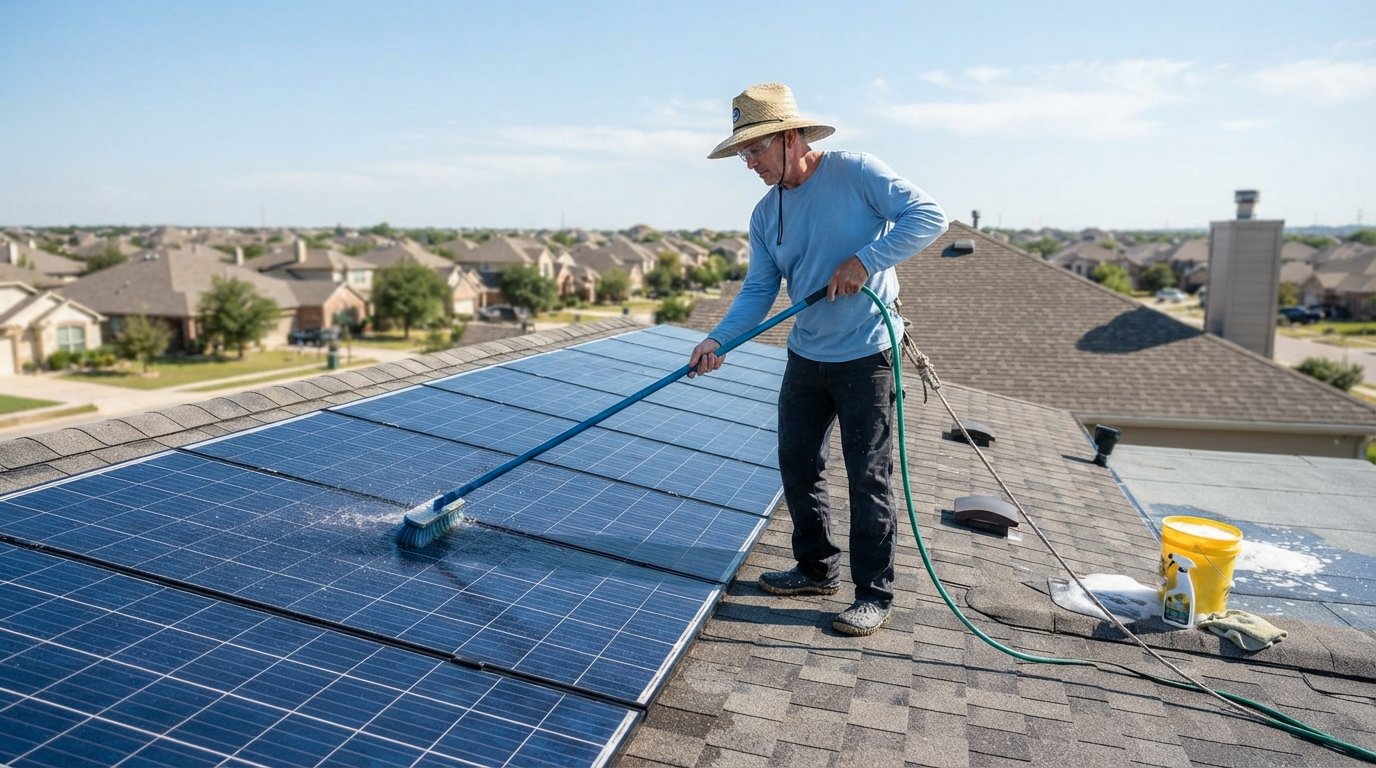
- Work from the ground first. Use an extension pole to reach lower panels and rinse away loose dirt. This reduces how much you have to climb.
- If you must go on the roof, wear a harness and anchor it to a secure point. Never work alone. Have someone spot you from the ground.
- Rinse with water, then scrub gently with your soft brush. Work in small sections and avoid pressing hard. Let the brush do the work.
- Rinse again to remove soap and dirt. Start at the top and work downward so dirty water does not run over clean panels.
- Inspect for streaks or missed spots. Touch up as needed, then let the panels air dry.
- Restore power and check your monitoring app. Confirm that production returns to normal.
After cleaning, take a few minutes to note any changes in output or any new damage you spotted. If production does not improve or you see cracks or hot spots, schedule a professional inspection. Small issues caught early are far cheaper to fix than a failed panel or a fire hazard.
For homeowners who want to compare cleaning options or get help choosing the right maintenance plan, a solar panel selection tool can match you with local pros and clarify what your system needs.
Electrical Hazards: What You Must Never Do
Electricity is the invisible danger in every solar cleaning job. Even a single panel can produce enough voltage to hurt you, and strings of panels add up quickly. The following actions are absolute no-gos, no matter how confident you feel.
- Never touch wiring, connectors, or junction boxes with wet hands or while standing in water.
- Never use metal tools near live components. A dropped wrench or scraper can bridge a circuit.
- Never clean panels during rain, storms, or when the roof is wet from recent weather.
- Never assume the system is off just because the inverter is off. The DC side remains live in daylight.
- Never clean damaged panels yourself. Cracked glass, exposed wiring, or burn marks require a licensed professional.
If you notice any of these issues, stop immediately and call a certified solar technician. Attempting to clean around damage is one of the most common ways homeowners get shocked or make a small problem much worse. A professional can also check for ground faults, arc faults, and other hidden hazards that are not visible from the ground.
Roof Safety: Preventing Falls and Slips
Falls are the leading cause of serious injury among homeowners who clean their own panels. The roof is not a stable workspace, and solar panels add slick glass and sharp edges to the equation. Treat every roof as a fall hazard, even a low one.
Always use a harness and anchor point when working on any roof higher than a single story, and consider using one even on single-story roofs. Wear shoes with good traction, and never work in wet or windy conditions. Keep your ladder at a safe angle (about 75 degrees) and secure it at the top. If your roof is steep, tiled, or has skylights or fragile sections, hire a professional. The risk is simply not worth it.
For ground-mounted arrays, the risks are lower but not zero. Watch for uneven terrain, hidden holes, and tripping hazards like hoses and cords. Keep your work area clear and use a ground fault circuit interrupter (GFCI) outlet if you use any electrical equipment outdoors.
Water, Chemicals, and Environmental Considerations
The type of water you use and how you dispose of it matters. Hard water leaves mineral spots that reduce panel efficiency and are difficult to remove. If your tap water is hard, consider using filtered or deionized water for the final rinse. Avoid cleaning in the heat of the day, when water evaporates quickly and leaves spots behind.
Chemicals are another concern. Harsh cleaners can damage the anti-reflective coating on solar glass, void warranties, and run off into your garden or storm drains. Stick to mild soap and water, and never mix cleaning products. If you have a well or septic system, be especially careful about what runs off your roof.
Finally, think about wildlife. Birds, squirrels, and insects are attracted to the shade and warmth under panels. Cleaning is a good time to check for nests, chewed wiring, and droppings. If you find evidence of pests, call a professional to remove them safely and to seal entry points. Do not try to handle wildlife yourself.
When to Call a Professional Instead
DIY cleaning is fine for many single-story, easily accessible arrays, but some situations demand a pro. Call a certified solar installer or maintenance company if any of the following apply:
- Your roof is steep, multi-story, or made of fragile materials like tile or slate.
- You see cracked glass, burnt connectors, loose wiring, or signs of animal damage.
- Your system is under warranty that requires professional service.
- You are not comfortable working at heights or around electricity.
- Your panels are heavily soiled with sap, cement dust, or bird droppings that require special cleaning.
Professional cleaning typically costs a few hundred dollars and includes an inspection that can catch problems early. Many solar companies offer maintenance plans that bundle cleaning, inspection, and performance monitoring. If you are not sure whether your system needs attention, a quick call to a qualified installer can save you time, money, and risk.
Keeping your panels clean is one of the simplest ways to protect your solar investment and maximize your savings. With the right safety guidelines for DIY solar panel cleaning, you can handle light dirt on safe, accessible arrays without incident. For everything else, trust the professionals. Your roof, your wiring, and your body will thank you.