
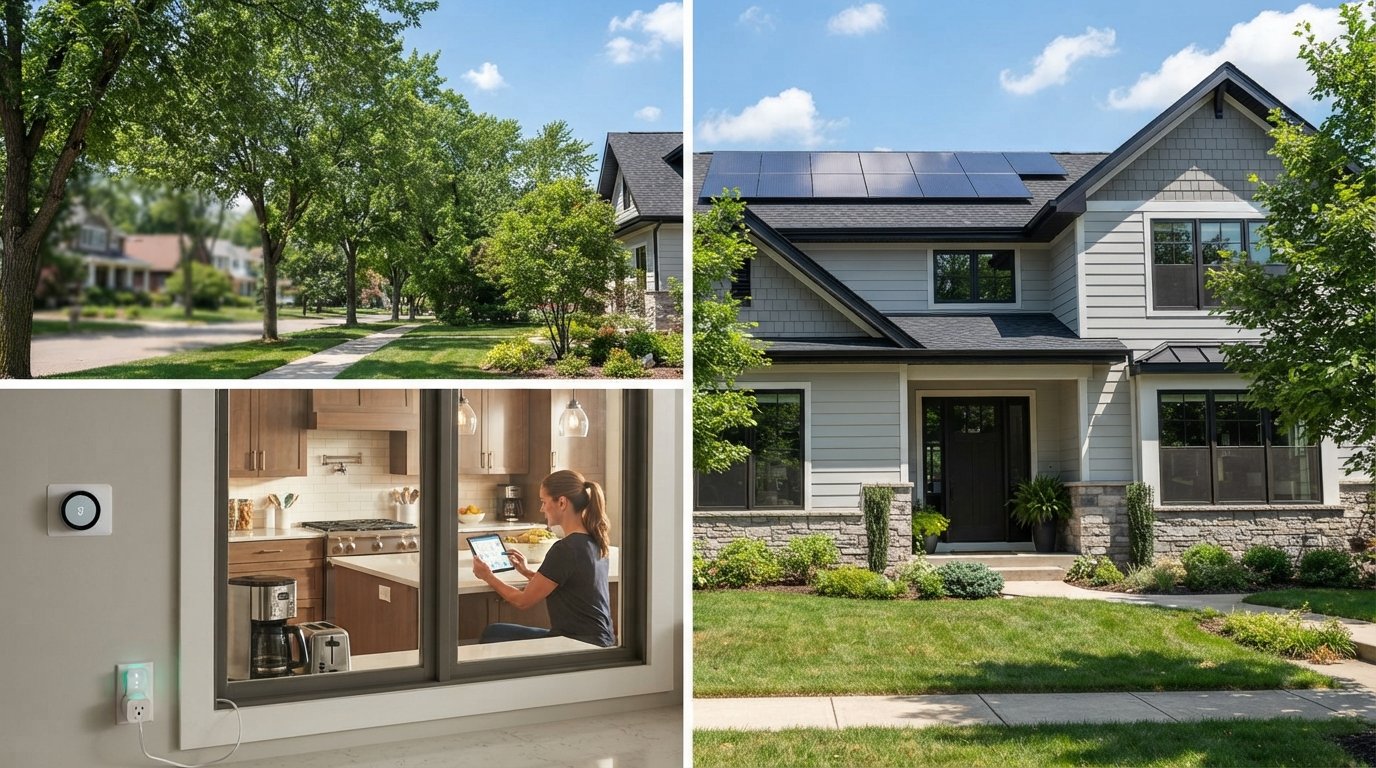
Smart Home Devices: Optimizing Solar Consumption
Discover how smart thermostats, plugs, and energy monitors can boost your solar self-consumption and cut electricity bills by up to 30%.

By Alexia Mabel
Learn more about Solar Panel Installation and Repair for guides, costs, and what to expect.
Compare Solar Panel Installation and Repair Pros Near You

Enter your ZIP code to compare top-rated local professionals and request free quotes.
Your solar panels are generating clean electricity, but are you truly making the most of every kilowatt-hour they produce? For many homeowners, the gap between solar generation and actual energy use can quietly erode the financial benefits of their investment. You might be exporting surplus power to the grid for a few cents per kilowatt-hour, only to buy it back at night for three times the price. This is where the concept of optimizing solar consumption with smart home devices becomes a game-changer, transforming your solar array from a simple generator into an intelligent, self-managing energy hub.
Why Smart Consumption Matters More Than Generation
Solar panels only produce electricity when the sun is shining, which often overlaps with times when your home's energy demand is low. Without a strategy to shift your consumption to those peak production hours, you are leaving significant savings on the table. The economic value of solar power is not just in generating electricity; it lies in how much of that generated power you actually use yourself instead of pulling from the grid. This self-consumption ratio is the single most important metric for maximizing your return on investment.
Consider a typical scenario: your panels produce 30 kilowatt-hours (kWh) on a sunny day, but your home only uses 15 kWh during daylight hours. You export the remaining 15 kWh to the grid. Under net metering, you might receive a credit, but often at a lower rate than retail. At night, you draw 15 kWh from the grid at the full retail price. If you could shift just half of your evening usage to the daytime, you would significantly reduce your grid dependence and lower your electricity bill. Smart home technology makes this shift automatic and effortless.
By actively managing when and how you use electricity, you can achieve a self-consumption rate of 80% or higher, compared to the 50% or less achieved by many households without smart controls. This not only saves money but also reduces strain on the grid and maximizes the environmental benefits of your solar investment.
The Core Technologies Behind Smart Solar Optimization
To understand how to optimize your solar consumption, it is helpful to know the key devices that make up a smart energy ecosystem. These technologies work together to monitor, predict, and automatically adjust your energy usage patterns. Each component plays a unique role in creating a responsive and efficient home energy system.
- Smart Meters and Energy Monitors: These devices provide real-time data on both your solar production and your home's consumption. They are the eyes of your system, showing you exactly where and when electricity is being used.
- Smart Plugs and Switches: These allow you to control individual appliances remotely or on a schedule. They are the hands, turning devices on or off based on your preferences or automated rules.
- Smart Thermostats: These learn your heating and cooling habits and can precool or preheat your home during peak solar production hours, reducing the load on your HVAC system later in the day.
- Smart Home Energy Management Systems (HEMS): These are the brains of the operation. They aggregate data from all your devices and automatically optimize energy usage based on solar forecasts, electricity prices, and your personal routines.
These devices work in concert to create a system that is greater than the sum of its parts. A smart thermostat alone can save you 10% on heating and cooling costs, but when integrated with a HEMS and real-time solar data, the savings multiply. The key is integration and automation, not just individual smart gadgets.
How a Home Energy Management System Works
A HEMS is the central platform that ties everything together. It connects to your solar inverter, smart meter, and various smart devices throughout your home. Using algorithms and machine learning, it forecasts your solar production based on weather forecasts and analyzes your historical consumption patterns. It then creates an optimal schedule for running high-energy appliances, such as dishwashers, washing machines, and electric vehicle (EV) chargers, to coincide with times of maximum solar generation.
For example, instead of running your dryer at 8 PM, the HEMS might delay it until 2 PM when your panels are producing at their peak. You might not even notice the change, but your grid consumption drops dramatically. Some advanced systems can even integrate with battery storage, charging your battery during the day and discharging it at night, further increasing your independence from the grid. This level of automation is the essence of optimizing solar consumption with smart home devices.
Practical Steps to Optimize Solar Consumption with Smart Home Devices
Implementing a smart solar optimization strategy is not an all-or-nothing proposition. You can start small and gradually expand your system. The key is to begin with a clear understanding of your energy usage and then add devices that provide the most significant impact for your situation. Here is a practical, step-by-step approach to get you started on your journey toward maximizing your solar savings.
- Audit Your Energy Usage: Before you buy any new devices, use your solar monitoring app or a basic energy monitor to identify your largest energy consumers and their operating times. Look for appliances that run during the evening or at night, such as pool pumps, EV chargers, and dishwashers.
- Install a Smart Thermostat: This is often the easiest and most cost-effective first step. Program it to pre-cool your home in the afternoon, so the AC runs less during peak evening hours. This can shift a significant amount of energy consumption to solar production hours.
- Use Smart Plugs for Heavy Appliances: Connect devices like your washing machine, dryer, and dishwasher to smart plugs. Set schedules to run these appliances during the middle of the day, or use the manual override in your HEMS app to start them when solar production is at its highest.
- Invest in a Home Energy Management System: Once you have a few smart devices, a HEMS will coordinate them automatically. It can monitor your solar output in real-time and make split-second decisions to power devices only when you are producing excess electricity. This is the pinnacle of optimizing solar consumption with smart home devices.
- Consider Smart EV Charging: If you own an electric vehicle, a smart charger is a must. It can charge your car only when your solar panels are generating surplus power, or during off-peak hours if you have a time-of-use rate plan. This can save you hundreds of dollars annually.
Each of these steps builds on the previous one, creating a more integrated and efficient energy system. You do not need to implement all of them at once. Start with a smart thermostat and a few smart plugs, and you will immediately see a shift in your consumption patterns. As you become more comfortable, you can add more devices and a central HEMS to automate the entire process. The result is a home that actively participates in your energy independence.
Real-World Savings and Efficiency Gains
The financial impact of smart solar optimization is substantial. According to a study by the Rocky Mountain Institute, homes with smart energy management can increase their solar self-consumption by 10 to 30 percent. For a typical home with an 8 kW solar system, this could mean an additional $300 to $900 in annual savings on electricity bills. These numbers can grow even larger with an EV or a heat pump, which are major energy consumers that can be easily shifted to solar production hours.
Beyond pure financial savings, smart optimization also extends the life of your solar equipment. By reducing the amount of energy you export to the grid and instead using it at home, you reduce the cycling of your inverter and battery (if you have one), which can slightly extend their operational lifespan. Additionally, if you live in an area with time-of-use electricity rates, your savings multiply. For example, if your utility charges 30 cents per kWh in the evening but only 10 cents during the day, shifting 10 kWh of consumption to the daytime saves you $2 per day, or $730 per year.
These savings are not just theoretical. Homeowners across the United States are reporting significant reductions in their grid consumption after implementing smart home strategies. In our guide on polycrystalline solar panels, we discuss how the type of panel you choose affects your overall system efficiency, but the consumption side is equally important. A high-efficiency solar array paired with smart consumption habits is the ultimate combination for maximizing your return on investment.
Overcoming Challenges and Considering Battery Storage
While the benefits are clear, there are some challenges to consider when optimizing solar consumption. The most common hurdle is the upfront cost of smart devices. However, many utility companies offer rebates or incentives for installing smart thermostats and energy management systems. Federal tax credits for solar batteries can also help offset costs if you choose to add storage. Another challenge is the complexity of setting up and managing these devices. This is why a HEMS is so valuable; it automates the process, so you do not have to manually adjust schedules every day.
Battery storage is the perfect complement to smart home devices. A solar battery allows you to store excess solar energy during the day and use it in the evening, effectively making your home self-sufficient around the clock. Smart devices can control when the battery charges and discharges, ensuring you always have power when you need it. For example, the HEMS might keep the battery in reserve if a storm is forecast, or it might discharge the battery during peak evening rates to avoid drawing from the grid. If you are ready to take your energy independence to the next level, combining smart home devices with a battery is the most effective strategy.
If you are still in the research phase and want to understand your options, getting multiple quotes from certified installers is essential. An informational platform like FreeSolarPowerQuotes can help you compare offers and understand the potential for integrating smart home features into your solar installation. Remember, the best solar installation is not just about the panels on your roof; it is about how the entire system, including your smart devices, works together to meet your energy needs.
Future Trends in Smart Solar Home Management
The field of smart home energy management is evolving rapidly. One exciting trend is the integration of artificial intelligence (AI) that learns your habits and preferences even more deeply. AI can predict not only your solar production but also your lifestyle patterns, such as when you typically do laundry or charge your car. It can then optimize energy usage without any input from you. Another trend is vehicle-to-home (V2H) technology, which allows your EV to power your home during outages or during peak evening hours, using the car's battery as a backup power source.
Smart devices are also becoming more standardized, with protocols like Matter and Zigbee making it easier for devices from different manufacturers to communicate with each other. This will simplify the setup process and make comprehensive energy management accessible to more homeowners. As utilities increasingly implement time-of-use rates and even dynamic pricing, the value of smart home automation will only grow. Your devices will know when electricity is cheapest and adjust your consumption accordingly, all without your intervention.
For homeowners in states with aggressive solar incentives, such as California, Texas, and the northeastern states, these smart technologies are quickly becoming a standard part of any new solar installation. Whether you are just starting to explore solar or are looking to upgrade an existing system, investing in smart home devices is a forward-thinking move. It not only optimizes your current solar consumption but also future-proofs your home for the evolving energy landscape.
Ultimately, optimizing solar consumption with smart home devices is about taking control of your energy destiny. It transforms you from a passive consumer of electricity into an active manager of your personal power plant. The savings are tangible, the environmental benefits are real, and the sense of energy independence is empowering. As the cost of smart technology continues to decrease, there has never been a better time to make your home work smarter, not harder. Start small, think big, and watch your energy bills shrink while your solar investment flourishes.
Learn more about Solar Panel Installation and Repair for guides, costs, and what to expect.
Compare Solar Panel Installation and Repair Pros Near You
Enter your ZIP code to compare top-rated local professionals and request free quotes.