
Solar Panel Recycling and End of Life Options for 2026
Solar panel recycling and end of life options keep old modules out of landfills. Recover valuable materials and support a circular solar economy.

By Benjamin Kalif
Learn more about Solar Panel Installation and Repair for guides, costs, and what to expect.
Compare Solar Panel Installation and Repair Pros Near You

Enter your ZIP code to compare top-rated local professionals and request free quotes.
Solar panels are built to last, but they do not last forever. After 25 to 30 years of reliable electricity production, every module eventually reaches the end of its useful life. With millions of panels already installed across the United States, the question of what happens to them after decommissioning is becoming impossible to ignore. Homeowners who invested in solar to reduce their carbon footprint now want to know that their equipment will not end up in a landfill. Fortunately, solar panel recycling and end of life options have matured significantly, offering practical pathways that recover valuable materials and reduce environmental impact.
The challenge is real but manageable. Crystalline silicon panels contain glass, aluminum, copper, silver, and small amounts of silicon and other metals. Most of these materials can be recovered and reused. The recycling industry has responded with specialized processes, and a growing number of facilities across the country now accept end-of-life solar modules. Understanding these options helps you plan ahead, whether you are decommissioning an old array or simply want to know what happens decades from now.
Why Solar Panel Recycling Matters
The first generation of residential solar installations is now reaching retirement age. According to industry estimates, the United States could see hundreds of thousands of tons of retired panels annually by the early 2030s. Without proper recycling, these modules would occupy significant landfill space and waste materials that required substantial energy to produce. Recycling recovers glass, aluminum, copper, and silver, reducing the need for virgin mining and lowering the overall carbon footprint of solar energy.
There is also a regulatory dimension. Some states, including Washington and California, have begun classifying photovoltaic modules as universal waste or have introduced extended producer responsibility rules. These regulations make it illegal to simply throw panels in the trash in certain jurisdictions. Even where landfill disposal remains legal, many homeowners and businesses prefer to recycle because it aligns with the sustainability goals that motivated their solar investment in the first place.
Beyond environmental and legal considerations, recycling supports the domestic supply chain. Recovered silicon and metals can feed back into manufacturing, creating a circular economy for solar components. This reduces reliance on imported materials and can lower costs over time. As more recycling infrastructure comes online, the economics of recovery continue to improve.
How Solar Panel Recycling Works
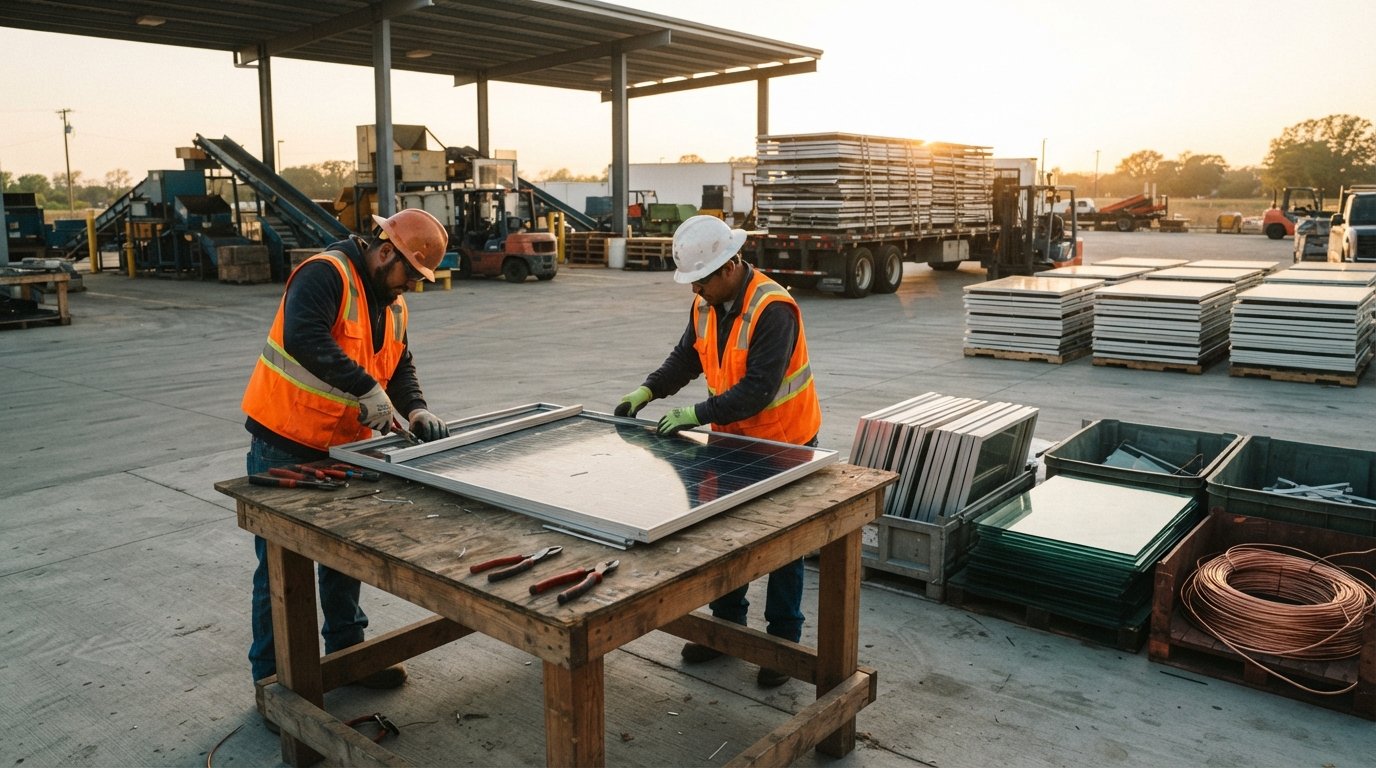
The recycling process for solar panels typically begins with collection and transportation to a specialized facility. Because panels are bulky and fragile, they are usually palletized and shrink-wrapped for safe shipping. Once at the recycling center, the modules undergo a series of mechanical and thermal steps to separate materials.
A typical recycling sequence includes:
- Disassembly and frame removal: The aluminum frame and junction box are removed first, as these are easily recycled and have established scrap value.
- Glass separation: The glass cover is separated from the silicon cells and backsheet, often through crushing and screening. The glass is then cleaned and sent to glass recyclers.
- Silicon and metal recovery: The remaining material is processed to recover silicon, copper, silver, and other metals. Some facilities use chemical or thermal methods to purify these materials.
- Backsheet and polymer processing: The plastic backsheet and encapsulant layers are typically incinerated for energy recovery or landfilled if no viable recycling outlet exists.
The efficiency of these processes varies by facility and panel type. Thin-film panels, such as cadmium telluride, require different handling because they contain different semiconductor materials. Some recyclers specialize in thin-film, while others focus on crystalline silicon. Regardless of the technology, the goal is to recover as much material as possible while minimizing waste.
It is worth noting that recycling solar panels is more complex than recycling glass bottles or aluminum cans. The layers are bonded together, making separation challenging. That is why dedicated photovoltaic recycling facilities are essential. Fortunately, the number of such facilities in the United States is growing, and some manufacturers now offer take-back programs for their own modules.
End of Life Options for Solar Panels
When a solar array reaches the end of its life, owners have several options. The best choice depends on the condition of the panels, local regulations, and your budget. Below are the primary pathways available today.
1. Recycling Through a Specialized Facility
This is the most environmentally responsible option. Specialized recyclers accept end-of-life panels and recover the majority of materials by weight. Some facilities charge a per-panel fee, while others offer free drop-off or even pay for panels with high-value components. Many installers now partner with recyclers to handle decommissioned arrays, making the process convenient for homeowners.
2. Manufacturer Take-Back Programs
Several major solar manufacturers have established take-back or trade-in programs. These programs ensure that panels are recycled responsibly and may offer a credit toward new equipment. If your panels are still under warranty or you are upgrading to newer, more efficient models, a take-back program can be an excellent choice. Check with your original manufacturer or installer for details.
3. Resale or Donation
Panels that are still functional but no longer needed can often be resold or donated. Older panels may produce less power, but they can still be useful for off-grid applications, small projects, or community organizations. Online marketplaces and local solar installers sometimes facilitate resale. Donating panels to schools or nonprofits can also qualify for a tax deduction, though you should consult a tax professional.
4. Repurposing for Secondary Uses
Even panels with reduced output can be repurposed for low-demand applications such as charging batteries, powering garden lights, or running small water pumps. This extends their useful life and delays recycling. However, repurposing requires some technical knowledge and should only be done if the panels are safe and not physically damaged.
5. Landfill Disposal (Last Resort)
In some states, landfill disposal is still permitted for solar panels. However, this option is increasingly discouraged and may be restricted by local ordinances. Landfilling wastes valuable materials and can leach heavy metals if panels are damaged. It should be considered only when no other option is available.
To choose the best end-of-life option, start by assessing the condition of your panels and checking your state regulations. Then contact local recyclers or your installer for guidance. If you are planning a new installation, ask your installer about their decommissioning and recycling policy upfront. You can also use our Solar Panel Selection Tool to compare equipment that may offer better end-of-life support.
Regulations and Incentives for Solar Panel Recycling
As the volume of retired panels grows, state and federal policies are evolving. At the federal level, the Infrastructure Investment and Jobs Act has funded research into solar recycling technologies and supported the development of a domestic recycling industry. The Environmental Protection Agency has also published guidance on managing end-of-life solar panels under existing hazardous waste rules.
Several states have taken the lead. Washington state requires manufacturers to finance the recycling of panels sold in the state. California classifies solar panels as universal waste, which streamlines handling and prohibits landfill disposal. Other states, including New York, New Jersey, and Illinois, are considering similar measures. These regulations reduce the burden on consumers and ensure that recycling becomes the default option.
Incentives for recycling are less common than incentives for installation, but some utilities and local governments offer rebates or free drop-off events. The Solar Energy Industries Association and other trade groups maintain resources that list recycling options by state. If you are decommissioning a system, check with your state energy office or local waste authority for current programs.
Planning for the End of Life of Your Solar Array
The best time to think about solar panel recycling is before you install. When requesting quotes, ask installers about their decommissioning services and whether they partner with certified recyclers. Some companies include end-of-life management in their service agreements, which can save you headaches decades later. For a free, no-obligation quote from vetted installers who can address these concerns, visit FreeSolarPowerQuotes.
If your system is already installed, keep documentation about the panel make and model. This information helps recyclers identify materials and process the panels efficiently. It also helps if you need to claim warranty support or participate in a manufacturer take-back program. As your system ages, monitor performance and plan for replacement or decommissioning at least a year in advance.
Finally, consider the broader impact of your choices. Recycling solar panels conserves resources, reduces pollution, and supports a sustainable energy future. By choosing responsible end-of-life options, you ensure that your solar investment continues to benefit the planet long after the panels stop producing electricity.