
Whole Home Battery Backup: Cut Energy Costs and Stay Powered
Whole home battery backup protects your home from outages and reduces monthly electric costs. Learn about the best solar storage options.

By Alexia Mabel
Learn more about Solar Panel Installation and Repair for guides, costs, and what to expect.
Compare Solar Panel Installation and Repair Pros Near You

Enter your ZIP code to compare top-rated local professionals and request free quotes.
When the lights go out, your home's comfort and safety hang in the balance. For years, homeowners relied on noisy, fuel-guzzling generators or simply tolerated the darkness. But a smarter, cleaner solution has emerged: whole home battery backup. This technology not only keeps your refrigerator running and your internet online during a blackout but also reshapes how you use electricity every single day. By storing solar energy or cheap grid power, a whole home battery system gives you control over your energy bills and your peace of mind.
What Is Whole Home Battery Backup?
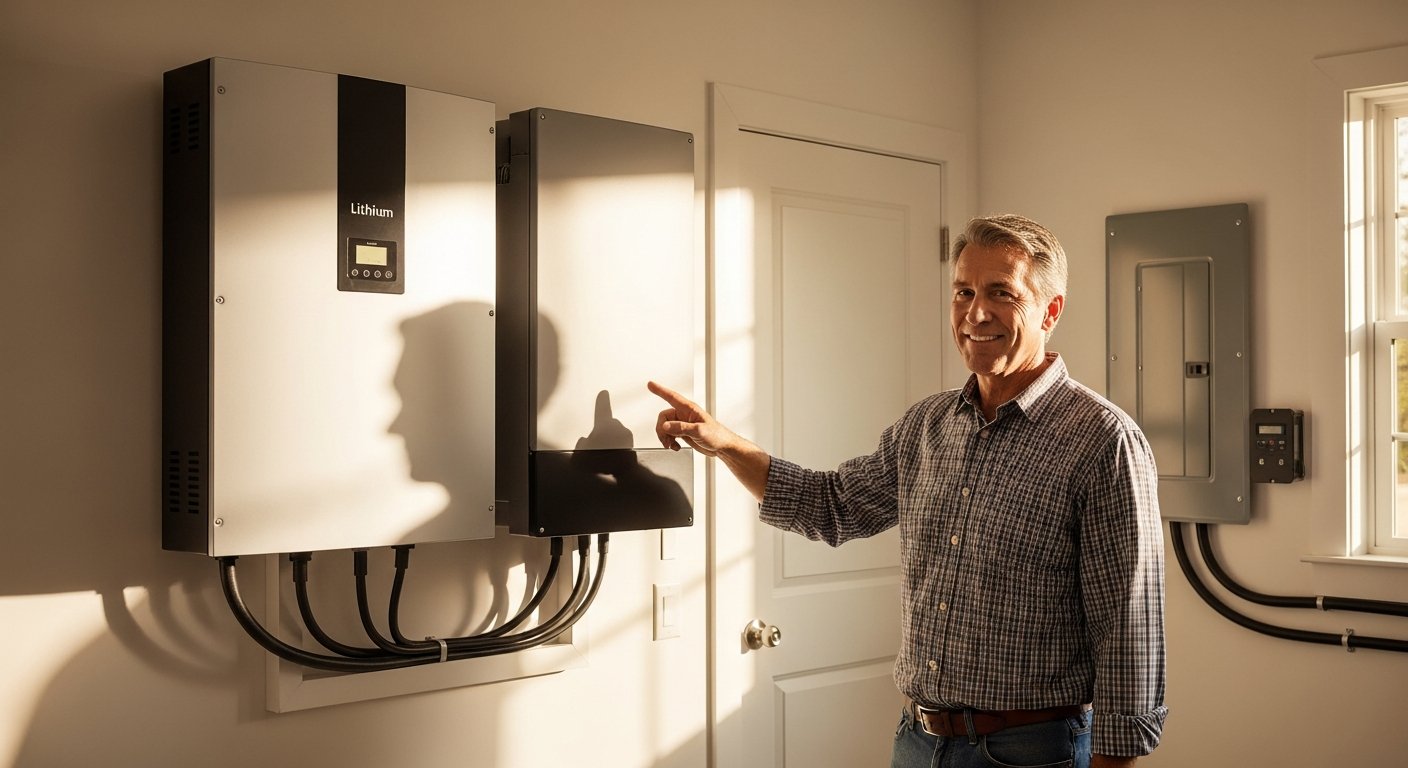
A whole home battery backup system consists of a large lithium-ion battery bank, an inverter, and energy management software. It stores electricity from solar panels or from the grid during low-rate periods. When the grid fails or when electricity prices spike, the battery automatically supplies power to your entire house. Unlike smaller "critical load" batteries that only power a few circuits, a whole home system is designed to handle your full electrical load for hours or even days, depending on capacity and usage.
Typical systems offer capacities between 10 and 20 kilowatt-hours (kWh) with power outputs of 5 to 10 kW continuous. This is enough to run lights, appliances, HVAC systems, and even EV chargers for a significant period. The battery is typically installed indoors or in a weatherproof cabinet outside, paired with a hybrid inverter that manages both solar generation and battery storage.
Why Now? The Case for Whole Home Battery Backup
Several converging trends make whole home battery backup more attractive than ever. Grid reliability is declining due to extreme weather and aging infrastructure, while electricity rates are rising faster than inflation. At the same time, battery prices have fallen by more than 80% over the past decade, and federal and state incentives have expanded. Here are the key drivers:
- Frequent blackouts and public safety power shutoffs , Utility companies are increasingly cutting power during wildfire seasons or storm events, leaving homes vulnerable.
- Time-of-use (TOU) electricity rates , Many utilities now charge higher rates during peak hours. A whole home battery can store cheap off-peak energy and power your home during expensive peak times.
- Net metering policy changes , As utilities reduce the value of solar credits, self-consuming your own stored solar energy becomes more valuable than sending it back to the grid.
- Electric vehicle (EV) adoption , Homeowners with EVs want reliable backup that can also charge their car during an outage.
Together, these factors mean that a whole home battery backup system doesn't just protect you during emergencies; it actively lowers your monthly electricity bills and reduces your carbon footprint.
Key Benefits Beyond Backup Power
While power outage protection is the most obvious benefit, the financial and lifestyle advantages of whole home battery backup are equally compelling.
1. Energy Cost Savings
By charging the battery when electricity is cheap (usually overnight or on weekends) and discharging during expensive peak hours, you can slice up to 30-50% off your demand charges and time-of-use costs. If you have solar panels, you can store excess solar energy instead of selling it to the grid at low rates, then use it in the evening when rates are high. This is known as "solar self-consumption" and can dramatically improve your solar ROI.
2. Energy Independence
A whole home battery system reduces your reliance on the utility grid. Over time, you become less vulnerable to rate hikes, grid outages, and energy price volatility. In some regions, homeowners with paired solar and battery systems can achieve near-total energy independence during sunny months.
3. Environmental Impact
Storing and using clean solar energy reduces the need for fossil-fuel peaker plants, which are the dirtiest and most expensive power plants on the grid. Even when charging from the grid during low-demand periods (when the grid is greener), the overall carbon footprint is lower than running a gas generator.
4. Increased Home Value
Homes with integrated whole home battery backup systems are increasingly attractive to buyers, especially in areas prone to outages. Studies show that solar-plus-storage systems can add 4-6% to a home's resale value, and they often sell faster than comparable non-equipped homes.
5. Quiet, Emissions-Free Operation
Unlike portable or standby generators, a battery system produces no noise, fumes, or exhaust. It can safely operate indoors and never requires fuel deliveries. This is a major advantage for neighborhoods with strict noise codes or for homeowners who want a completely clean backup solution.
How to Choose the Right Whole Home Battery Backup System
Selecting the best system for your home involves several technical and practical considerations. Below is a step-by-step approach to ensure you make an informed decision.
- Assess your energy needs. Calculate your home's average daily kWh consumption. Review your electric bills to find the highest usage days. Your battery should have enough capacity to cover essential loads for at least 8-12 hours during an outage. A typical 2,000 sq ft home needs 10-15 kWh of usable storage.
- Determine your power requirements. Look at the maximum simultaneous power draw from large appliances like AC, oven, well pump, and EV charger. The battery's continuous power rating (kW) must be able to handle that peak , often 5-10 kW for whole home systems.
- Choose between AC-coupled and DC-coupled. AC-coupled systems are easier to retrofit onto an existing solar installation, while DC-coupled systems are more efficient for new solar-plus-storage builds. Your installer can recommend the best approach.
- Evaluate battery chemistry. Most modern systems use lithium iron phosphate (LFP) chemistry, which offers long cycle life (6,000-10,000 cycles) and superior safety. Older nickel manganese cobalt (NMC) batteries are still common but have shorter lifespans and higher fire risk.
- Check warranty and service. Look for at least 10 years or 70% capacity retention. Brands like Tesla Powerwall 3, Enphase IQ Battery 5P, LG Energy Solution, and Generac PWRcell are popular options. Verify that your installer is certified and offers local service.
Once you have a shortlist, use NewSolarQuotes to compare quotes from multiple certified installers. They'll help you size the system correctly and apply for all available incentives.
Costs, Incentives, and Financing for Whole Home Battery Backup
The upfront cost of a whole home battery backup system typically ranges from $10,000 to $20,000 installed, depending on capacity, brand, and complexity of integration with existing solar. While this is a significant investment, several financial tools can reduce the net cost dramatically.
Federal Investment Tax Credit (ITC) , The ITC allows you to deduct 30% of the battery system cost from your federal taxes if it's charged by solar panels (or paired with a new solar installation). This applies to both new and retrofitted systems through 2032. A $15,000 battery system becomes $10,500 after the tax credit.
State and local incentives , Programs vary widely. California's Self-Generation Incentive Program (SGIP) offers up to $1,000 per kWh for low-income households, dramatically lowering costs. New York, Massachusetts, Oregon, and several other states also have rebates. Use the NewSolarQuotes state guides to find incentives in your area.
Financing options , Many installers offer solar-plus-storage loans with 0% down and low fixed rates. Some utility companies provide on-bill financing or subsidized loans. Additionally, Property Assessed Clean Energy (PACE) financing allows you to repay the system over 20 years via property tax assessments.
Over the system's 15-20 year lifespan, the combination of reduced electricity bills, avoided generator costs, and potential increase in home value can produce a positive ROI within 5-8 years in many markets. With a whole home battery backup, you aren't just buying a backup device; you are investing in long-term energy savings and resilience.
Whole home battery backup is no longer a luxury for the wealthy; it is becoming a practical investment for any homeowner seeking energy security and lower bills. As battery prices continue to drop and incentives remain strong, now is an excellent time to explore your options. Start by getting free, no-obligation quotes from certified installers through NewSolarQuotes and take the first step toward a truly energy-independent home.