
Wind vs Solar for Homes: Which Is Better in 2026?
Compare residential wind and solar energy systems by cost, location, and reliability to find the best fit for your home.

By Benjamin Kalif
Learn more about Solar Panel Installation and Repair for guides, costs, and what to expect.
Compare Solar Panel Installation and Repair Pros Near You

Enter your ZIP code to compare top-rated local professionals and request free quotes.
When you picture renewable energy for your home, solar panels likely come to mind first. But small wind turbines are also gaining attention as a way to slash electricity bills. If you are weighing your options, comparing residential wind and solar energy systems goes beyond just looking at price tags. It involves understanding your property, your local climate, and how each technology performs under real-world conditions. This guide breaks down the key differences so you can choose the clean energy solution that fits your life and your budget.
How Each System Generates Power
Solar panels convert sunlight directly into electricity using photovoltaic cells. They work best when exposed to direct, unobstructed sunlight, which is why placement and shade are critical factors. Wind turbines, on the other hand, capture kinetic energy from the wind using rotating blades that spin a generator. They produce power day and night as long as the wind blows above a certain speed.
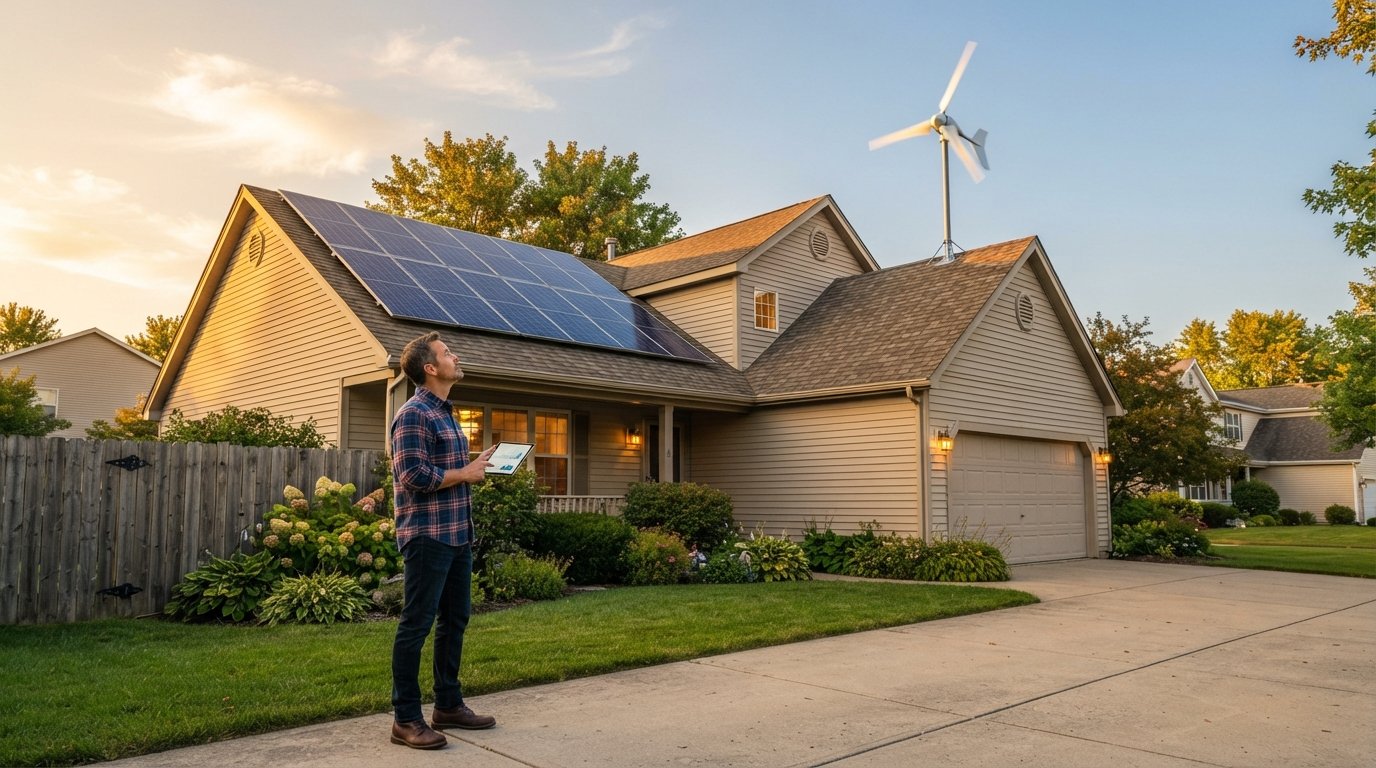
That difference alone shapes how you use each system. Solar output peaks at midday and drops to zero at night, while wind output is tied to weather patterns, which can be strong at night or during storms. For a steady energy supply, many homeowners pair both technologies in what is called a hybrid system.
Cost Comparison: Upfront and Long Term
Money is often the first hurdle. For solar, the average residential installation cost in the U.S. ranges from $15,000 to $25,000 before incentives, depending on system size and equipment quality. Federal tax credits and state rebates can lower that figure by 30 percent or more. Wind turbines are cheaper initially, with small residential models costing between $5,000 and $15,000 for a 1 to 10 kilowatt system, but they require more frequent maintenance.
However, the lower upfront price of wind can be misleading. Turbines have moving parts that wear out, and they may need tower repairs or blade replacements within 10 to 15 years. Solar panels have no moving parts and typically come with 25 year warranties. Over a 20 year period, solar often provides a better return on investment, especially if you are financing the system.
Cost Breakdown by System Type
- Solar panels: $2.50 to $3.50 per watt installed, with minimal ongoing costs.
- Wind turbines: $1.50 to $3.00 per watt, but add $500 to $2,000 per year for maintenance.
- Hybrid systems: Combine both, raising upfront cost but improving energy reliability.
Before you decide, get quotes from certified installers. A professional site assessment can reveal hidden costs like tree removal, tower permits, or roof reinforcements. For a detailed look at turbine expenses, you can read our residential wind turbine cost guide for 2026.
Space and Location Requirements
Solar panels are flexible. They can be mounted on roofs, carports, or ground racks, and they work on homes of all sizes. Even a small south facing roof can generate a meaningful portion of your electricity. Wind turbines, however, demand real estate. To avoid turbulence from buildings and trees, the turbine tower must be at least 30 feet higher than anything within 500 feet. That rule rules out most suburban lots.
Zoning laws also play a big role. Many municipalities restrict turbine height or require special permits, while solar installations are usually allowed by right. Homeowners associations may have aesthetic objections to both, but solar panels are more commonly accepted today. Before investing in wind, check your local codes and talk to neighbors.
Climate and Consistency of Output
Where you live largely determines which technology shines. Solar is a safe bet in sunny regions like the Southwest, where annual production is high and predictable. Wind is more viable in coastal areas, open plains, or mountain passes where average wind speeds exceed 10 miles per hour. If your property sits in a wooded valley, wind will likely disappoint you.
Even in windy areas, gusts are not constant. Turbines shut down in dangerously high winds, and they produce nothing in calm conditions. Solar has a similar weakness, but the pattern is easier to predict: you know the sun will rise every day. This predictability makes solar easier to pair with net metering or battery storage.
Energy Output and Efficiency
Efficiency numbers can mislead. Solar panels typically convert 18 to 22 percent of sunlight into electricity, but that rating does not account for real-world losses like heat buildup or inverter inefficiency. Wind turbines have a theoretical maximum efficiency of 59 percent (called the Betz limit), but actual residential units only capture 20 to 35 percent of the wind's energy.
What matters is your household's actual consumption. A 5 kW solar system might generate 6,000 to 8,000 kWh per year in good sun, covering a typical home's needs. A 5 kW wind turbine in a decent location can produce similar output, but only if wind speeds are adequate. In marginal wind zones, output can drop to 1,000 kWh or less, making solar the clear winner.
Maintenance and Lifespan
Solar panels are nearly maintenance free. Rain washes away dust, and the only regular task is clearing snow or leaves. Most systems last 25 to 30 years, with inverters needing replacement around year 10 to 15. Wind turbines, by contrast, are mechanical devices. They require annual inspections, bearing lubrication, and blade checks. Gearboxes and generators can fail, especially on cheaper models.
Noise and vibration are also concerns. Turbines emit a humming sound and can create low frequency vibrations that annoy nearby residents. Solar is silent and has no moving parts, so it never disturbs the peace.
Environmental Impact and Aesthetics
Both technologies reduce carbon emissions, but their footprints differ. Solar panels require mining for silicon and rare metals, while turbines use steel, copper, and fiberglass. Manufacturing processes for both have environmental costs, but the operational phase is clean. Turbines can pose risks to birds and bats, though small residential units have less impact than industrial wind farms.
Visually, solar panels lie flat on a roof, blending into the architecture. Turbines stand tall and spin, which some find beautiful and others find intrusive. If your home is in a historic district or a community with strict design guidelines, solar is usually the more compliant choice.
Financial Incentives and Payback
The federal Investment Tax Credit (ITC) currently covers 30 percent of qualified expenses for both solar and wind systems, but the credit for wind is set to phase down faster after 2024 unless extended. Many states offer additional rebates or performance payments for solar, while wind incentives are less common. Net metering policies, which credit you for excess power sent to the grid, are also more widely available for solar.
Payback periods reflect these differences. Solar systems typically recoup their cost in 6 to 10 years, depending on local electricity rates. Wind turbines, with lower upfront costs but higher maintenance, often pay back in 8 to 12 years, but only in truly windy locations. If you live in a typical suburban area, solar will almost always give you a faster return.
Making the Choice: A Practical Framework
Start by checking your average wind speed. The U.S. Department of Energy provides wind resource maps, but you should also measure conditions on your property for at least a year. If wind speeds are below 10 mph, skip the turbine. Next, examine your roof: does it have south facing exposure with minimal shade? If yes, solar is a straightforward choice.
Consider your budget and risk tolerance. Solar offers stable, predictable savings with low maintenance, while wind can be a gamble that pays off only under ideal conditions. You might also explore a hybrid system, but that is best reserved for off-grid properties where energy independence is worth the extra cost.
Finally, talk to multiple installers. They can run simulations using historical weather data and your utility bills to project output and savings. For a deeper dive into solar specifics, platforms like SolarEnergy.ai provide tools and resources to help you compare quotes and understand your options.
Both wind and solar can reduce your reliance on the grid, but they are not equal in every situation. Solar is the safer, more versatile default for most homes. Wind only makes sense for rural properties with strong, consistent winds and no zoning barriers. By comparing residential wind and solar energy systems with these criteria in mind, you can invest in a renewable setup that meets your needs without surprises.
Whichever path you choose, remember that energy efficiency improvements, like upgrading insulation or installing smart thermostats, multiply the benefits of any renewable system. Start with a home energy audit, then pair your generation source with storage if you want to maximize self consumption. The future of home energy is clean, but it only works if you pick the right technology for your address.