
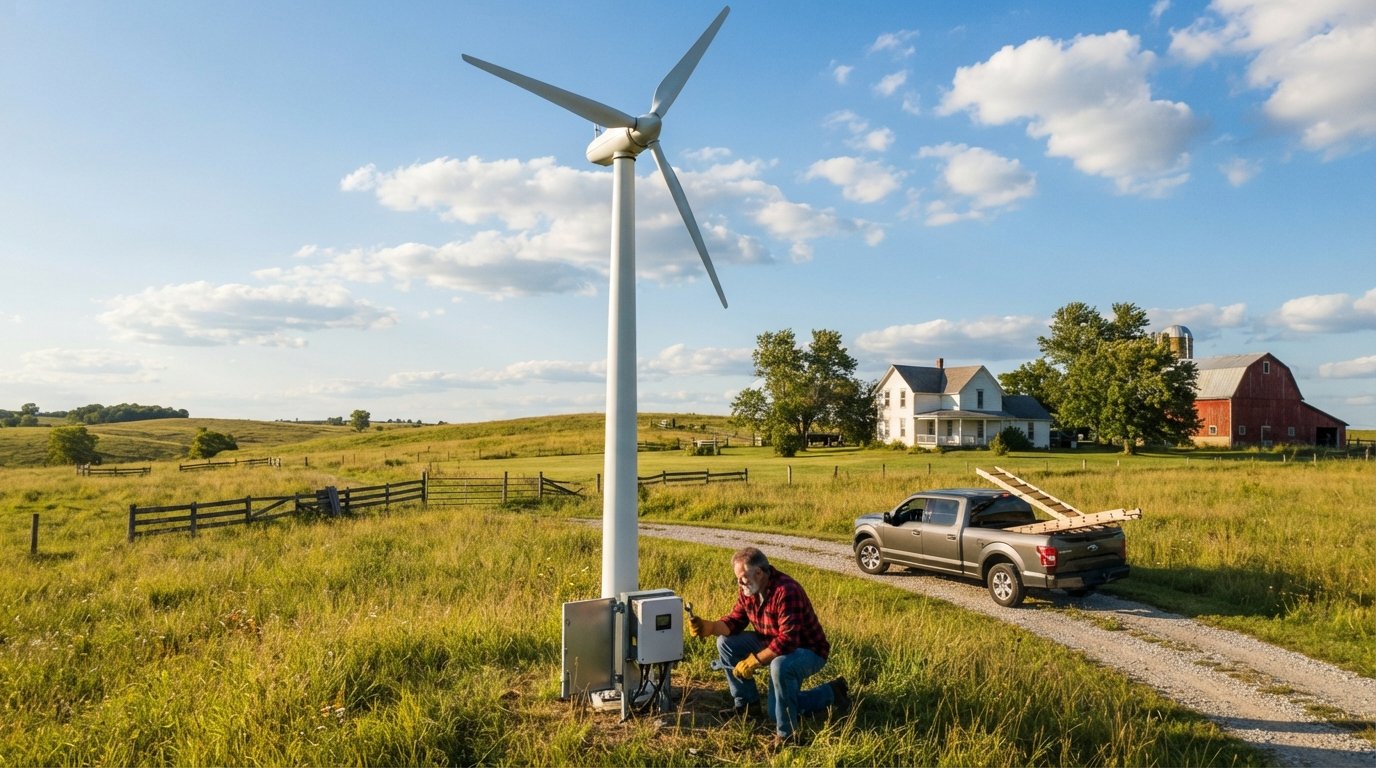
Residential Wind Turbine Cost and Installation Guide for 2026
Explore the full residential wind turbine cost and installation guide, including 2026 prices, payback periods, permits, and professional tips.
By Scott Thompson
Find Local Pros Near You

Enter your ZIP code to compare top-rated local professionals and request free quotes.
If your electric bill keeps climbing and your property has open space, a residential wind turbine might be the smartest renewable energy investment you never considered. While solar panels dominate the conversation, small wind systems can generate power day and night, especially in regions with consistent breezes. This residential wind turbine cost and installation guide breaks down what you will pay, what factors move the price, and how to install a system that actually pays off. By the end, you will know whether wind is a realistic option for your home and how to avoid costly mistakes during installation.
Why Homeowners Choose Wind Power
Wind energy offers a unique advantage over solar: it does not stop when the sun sets. A turbine on a tall tower can catch stronger, more consistent winds than rooftop panels, producing electricity around the clock. For homes in rural areas, farms, or coastal regions with average wind speeds above 10 mph, a turbine can cover a significant share of annual electricity use. That translates to lower utility bills, protection against future rate hikes, and a smaller carbon footprint.
Another key driver is energy independence. Pairing a wind turbine with battery storage can keep critical loads running during grid outages. Some homeowners also enjoy the satisfaction of generating their own power from a visible, mechanical source. However, wind is not for everyone. Zoning laws, lot size, and neighbors' tolerance for noise all play a role. That is why this guide emphasizes cost and installation realities, not just the romantic appeal of a spinning rotor.
How Much Does a Residential Wind Turbine Cost in 2026?
The total cost of a residential wind turbine depends heavily on size, tower height, and site preparation. As of 2026, a complete, professionally installed system typically ranges from $15,000 to $75,000. Small turbines rated at 1 to 5 kilowatts (kW) usually fall between $15,000 and $40,000, while larger 10 kW systems can push past $60,000. These figures include the turbine itself, tower, inverter, controller, wiring, and labor.
To give you a clearer picture, here is a breakdown of typical cost components for a 5 kW system:
- Turbine unit: $8,000 to $15,000, depending on brand and quality.
- Tower and foundation: $4,000 to $10,000, with taller towers costing more.
- Inverter and electrical work: $2,000 to $5,000, including grid connection.
- Permits and inspections: $500 to $2,000, varying by local jurisdiction.
- Installation labor: $3,000 to $8,000, often requiring a crane.
These numbers are averages; your actual quote may differ based on regional labor rates and tower height. The federal Investment Tax Credit (ITC) offers a 30% credit on installed costs, which significantly reduces the net price. Some states and utilities also provide rebates or performance-based incentives, so check local programs before budgeting.
Why Tower Height Matters So Much
Most residential turbines are mounted on towers ranging from 60 to 120 feet. The taller the tower, the more energy you generate, because wind speed increases with altitude. A 60-foot tower might cost $4,000, while a 120-foot tower can run $12,000 or more. That extra height often pays for itself within a few years by capturing steadier winds. However, taller towers also require larger foundations and more complex installation, which adds to labor costs.
In some areas, local zoning caps tower height, so you may need a variance. That process can add months and hundreds of dollars in legal fees. Always check your local regulations before buying equipment.
Installation Process: Step-by-Step
Installing a residential wind turbine is not a weekend DIY project. Most homeowners hire professionals due to the electrical work, structural engineering, and safety risks. Here is what the typical installation process looks like from start to finish.
- Site assessment: A professional measures wind speed, checks obstacles, and verifies setback distances from buildings and property lines.
- Permitting and zoning: You or your installer submits plans to the local building department and obtains necessary permits.
- Foundation construction: Concrete is poured to anchor the tower, which requires excavation and curing time.
- Tower erection: A crane or tilt-up method raises the tower and mounts the turbine.
- Electrical connection: An electrician wires the turbine to your home's breaker panel and, if applicable, the grid.
- Inspection and commissioning: Local inspectors verify safety, and the system is tested for proper operation.
Each step can take days or weeks. Foundation curing alone needs about a week. Expect the entire process, from permit approval to final hookup, to take two to four months. That timeline is important if you are trying to claim a tax credit by a specific date.
One of the biggest mistakes homeowners make is skipping the wind assessment. A professional uses an anemometer to measure wind speeds for several months. Without that data, you might install a turbine that never generates enough power to justify its cost. Spend the money on a proper assessment before buying equipment.
Factors That Increase or Decrease Total Cost
Several variables can push your final invoice well above the base price. Understanding these helps you budget realistically and avoid surprises.
- Grid connection: If you are far from the nearest power line, trenching and transformer upgrades can add thousands.
- Battery storage: Adding batteries for off-grid operation costs $5,000 to $15,000, depending on capacity.
- Remote site access: Difficult terrain or long distances from the installer increase labor and travel fees.
- Maintenance access: Turbines need periodic servicing, and a tall tower requires special equipment for repairs.
On the flip side, you can lower costs by choosing a smaller turbine, installing on an existing tall structure (if structurally sound), or doing some of the trenching and site prep yourself. However, always hire a licensed electrician for the final connection. Safety and code compliance are non-negotiable.
Also, consider the solar panel cost in 2026 as a comparison point; hybrid systems that combine wind and solar often provide more consistent year-round generation than either alone.
Return on Investment: When Does Wind Pay Off?
The payback period for a residential turbine typically ranges from 10 to 20 years, depending on wind speed, electricity rates, and incentives. In a windy location with high utility rates, a 10 kW turbine can generate 15,000 to 20,000 kWh per year, which is enough to cover most homes' usage. At $0.25 per kWh, that is $3,750 to $5,000 in annual savings. With a net installed cost of $42,000 after the 30% federal credit, payback lands around 9 to 11 years.
However, if your average wind speed is marginal, say 8 mph, output drops sharply. In that case, payback can stretch beyond 25 years, which makes the investment less attractive. That is why the wind assessment is so critical; it tells you whether your site is actually suitable.
Also, factor in maintenance. Turbines have moving parts that wear out. Expect to spend $100 to $300 per year on routine checks, and budget for bearing or blade replacements after 10 to 15 years. These costs are modest but should be included in your financial model.
Permits, Zoning, and Insurance: What You Must Know
Before you order a turbine, research your local zoning laws. Many municipalities restrict turbine height, require minimum lot sizes, and impose noise limits. Homeowners associations (HOAs) often have strict rules, sometimes banning turbines entirely. If you live in an HOA, get written approval before investing in equipment.
Permits typically cost between $200 and $1,000, but the process can be time-consuming. Some areas also require a structural engineer to certify that your tower can withstand local wind loads. That review adds $500 to $2,000. Insurance is another consideration. Your homeowner's policy may cover the turbine as part of your dwelling, but some insurers require a separate rider. Check with your agent to ensure you are protected in case of damage or liability.
If you plan to connect to the grid, your utility will require an interconnection agreement. This ensures your system meets safety standards and allows net metering, where you earn credits for excess generation. Utilities may charge a small fee for this, typically under $500, but they can also impose additional requirements like a disconnecting switch.
Maintenance and Lifespan of a Home Turbine
A well-built residential turbine can last 20 to 30 years, but only with regular care. Annual inspections should check blade condition, bolt torque, and electrical connections. The gearbox, if present, may need lubrication. Direct-drive turbines, which have fewer moving parts, tend to require less maintenance and last longer.
Noise is a common concern. Modern turbines are quieter than older models, but they still produce a low-frequency hum and blade swish. If you live close to neighbors, consider a turbine with lower tip speed or install it farther from property lines. Most units register between 40 and 60 decibels at 100 feet, which is similar to a quiet conversation.
Lightning protection is also essential. A tall tower is a prime lightning target, so ensure your system includes surge protectors and proper grounding. Without that, a single strike can destroy the inverter and controller, costing thousands in repairs.
Financing Options and Incentives for 2026
Beyond the federal ITC, many states offer additional incentives. For example, some utilities provide rebates of $0.50 to $1.00 per watt, and rural cooperatives may have special programs. Check the Database of State Incentives for Renewables and Efficiency (DSIRE) for up-to-date information. You can also finance your system with a home equity loan, a personal loan, or a renewable energy-specific loan. Some lenders offer terms up to 20 years, which can keep monthly payments below your average energy savings.
If you prefer to avoid upfront costs, a few companies offer leases or power purchase agreements (PPAs) for wind systems, but they are less common than in the solar market. Be cautious with such agreements; read the fine print about escalation clauses and maintenance responsibilities.
For a comprehensive look at renewable investment options, sites like SolarEnergy.ai provide tools and insights that help you compare wind and solar financials side by side.
DIY vs. Professional Installation
Some skilled homeowners attempt to install their own turbine to save money. While that can cut labor costs by $3,000 to $8,000, it introduces significant risks. Lifting a 500-pound turbine to the top of a 100-foot tower requires specialized equipment and training. Improper installation can lead to structural failure, electrical hazards, or voided warranties. Most manufacturers require professional installation to keep the warranty valid.
If you are determined to go the DIY route, at least hire a structural engineer to review your tower design and a licensed electrician to handle the grid tie. That compromise gives you some savings without sacrificing safety. However, for most people, professional installation is worth the cost, especially because a good installer will help with permits and inspections.
Choosing the Right Turbine and Installer
Not all turbines are created equal. Look for models certified under the Small Wind Certification Council (SWCC) or equivalent standards. These certifications validate performance and safety. Popular residential brands include Bergey WindPower, Primus Wind Power, and Air Breeze. Each has different power curves, noise levels, and reliability records, so read independent reviews before buying.
When selecting an installer, ask for references and verify their licenses and insurance. A reputable installer should provide a detailed written estimate that includes tower, turbine, electrical work, and permits. They should also offer a performance estimate based on your site's wind data, not a generic sales pitch. Get at least three quotes to compare pricing and approach.
Finally, consider a hybrid system. Pairing a small turbine with solar panels can smooth out daily and seasonal generation, making your home more resilient. Many installers offer package deals, and the combined investment often qualifies for the same tax credits.
In summary, a residential wind turbine is a substantial investment that requires careful planning. By following this residential wind turbine cost and installation guide, you can assess your site, budget accurately, and choose a system that delivers clean energy for decades. Start with a wind assessment, talk to local authorities, and compare quotes from certified installers. With the right preparation, your wind turbine can become a reliable source of savings and sustainability.