
Winterizing Solar Panels: Cold Weather Performance Tips
Keep your solar panels producing all winter with these winterizing solar panels tips for cold weather performance, from safe snow removal to battery care.
By Scott Thompson
Learn more about Solar Panel Cleaning for guides, costs, and what to expect.
Compare Solar Panel Cleaning Pros Near You

Enter your ZIP code to compare top-rated local professionals and request free quotes.
When the temperature drops and snow starts to fall, many homeowners wonder if their solar panels will still deliver the energy savings they counted on. The short answer is yes, but only if you prepare them properly. Cold weather can actually boost panel efficiency, yet snow, ice, and shorter daylight hours can reduce output if you ignore routine maintenance. In this guide, we share winterizing solar panels tips for cold weather performance so your system keeps working through the harshest months. You will learn how to protect your investment, maximize every winter watt, and avoid costly surprises when spring arrives.
Why Winter Performance Matters More Than You Think
Solar panels convert sunlight into electricity using semiconductor cells, and those cells actually operate more efficiently in cooler temperatures. Heat slows down electron movement, so a crisp winter day can produce more power per hour of sunlight than a scorching summer afternoon. The challenge is not the cold itself, it is the accumulation of snow, ice, and debris that blocks light from reaching the panel surface. Even a thin layer of snow can cut output by 50 percent or more, and heavy drifts can shut down production entirely.
For homeowners who rely on net metering or battery storage, a winter slump can mean higher utility bills or a drained backup system. That is why winterizing solar panels tips for cold weather performance are not just about maintenance, they are about protecting your financial return. A system that produces 20 percent less in December than its summer peak is still valuable, but a system that drops to 5 percent because of neglect is a wasted asset. With a few proactive steps, you can keep your panels close to their rated output all season long.
Assessing Your System's Winter Risks
Before you climb a ladder or call a professional, take a walk around your property and inspect your setup. Look for obvious issues like loose mounting brackets, cracked seals, or vegetation that could cast shadows as the sun's angle changes. Winter sun sits lower in the sky, so trees or buildings that did not shade your panels in July might block them in December. Trim any overhanging branches, but be careful not to damage the roof or the panels themselves.
You should also review your inverter's error logs and check your monitoring app for any performance drops from the past few months. If you see a sudden decline in output, it may indicate a wiring problem, a faulty inverter, or a microcrack that snow and ice can worsen. Catching these issues early is far cheaper than repairing water damage or replacing a panel in the middle of a blizzard. For a deeper look at how panel mounting affects winter performance, see our guide on installing solar panels on walls, which covers placement strategies that reduce snow buildup.
Snow Load and Structural Integrity
Snow is heavy, and a foot of wet snow can add dozens of pounds per square foot to your roof. Most solar mounts are engineered to handle this load, but older systems or those installed by inexperienced contractors may not be. Check your mounting rails for rust, corrosion, or any signs of movement after a heavy storm. If you notice gaps between the rail and the roof, call a certified installer right away, do not wait for spring.
If you live in a region with extreme snowfall, consider investing in snow guards or panel heaters. Snow guards prevent sudden avalanches of snow from sliding off the panels and damaging gutters, plants, or people below. Panel heaters, which are thin resistive elements attached to the frame, melt snow quickly and keep the surface clear. They consume a small amount of electricity, but they can pay for themselves by maintaining production during the darkest weeks of the year.
Clearing Snow and Ice Safely
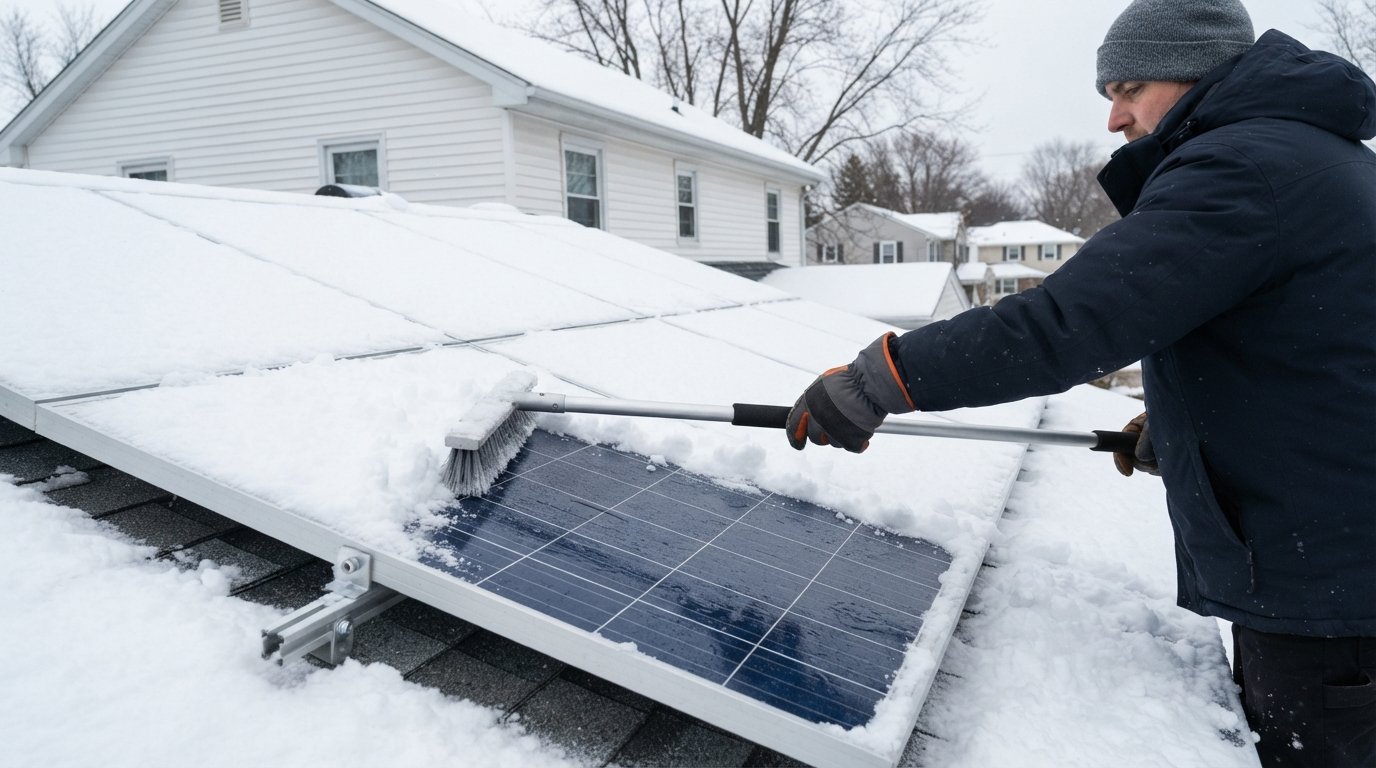
The most common winter mistake is rushing to clear snow with a metal shovel or a hard brush. These tools can scratch the glass, crack the cells, or void your warranty. Instead, use a soft foam roof rake with a long handle, or a squeegee designed specifically for solar panels. Pull the snow down gently, never push it upward, and avoid standing on the roof if the surface is slick. If you have a ground-mounted system, a leaf blower can work well on light, powdery snow.
For ice, never use salt, chemicals, or hot water. Salt corrodes the aluminum frame and the electrical connectors, while hot water can shatter cold glass. Let the sun melt ice naturally, or use a rubber mallet to tap the frame gently and break it loose. If the ice is thick and persistent, wait for a sunny afternoon when the panels warm up slightly, then slide a soft plastic scraper under the edge. Patience is safer than force, and your panels will thank you.
Here are some quick safety rules to remember when clearing snow:
- Use only soft tools, such as foam brushes, plastic scrapers, or roof rakes with rubber edges.
- Never walk on a snowy or icy roof; hire a professional if you cannot clear from the ground.
- Turn off the system before touching any electrical components, and keep hands dry.
- Inspect for damage after each major storm, especially cracks or loose connections.
Following these rules reduces the risk of injury and prevents accidental damage that could cost thousands to repair. If you are not comfortable working at heights, schedule a professional cleaning service once a month during the winter. Many solar companies offer seasonal maintenance packages that include snow removal, so you can enjoy peace of mind without the risk.
Optimizing Panel Angle and Orientation
Winter sunlight arrives at a lower angle, which means your panels need a steeper tilt to capture the most rays. If your panels are fixed at a summer angle of 20 degrees, they may be losing a significant portion of available light in December. Adjustable mounts allow you to change the tilt seasonally, typically to 45 or 60 degrees in winter, which also helps snow slide off more easily.
Ground-mounted systems are easier to adjust than roof-mounted ones, but even roof mounts can be modified if they use a tilt frame. If you cannot change the angle, focus on keeping the surface clear and removing any obstacles that create shadows. Some homeowners install small reflectors or white gravel below ground-mounted panels to bounce extra light onto the surface, which can boost winter output by a few percent. It is a low-cost trick, but it only works if the panels are already tilted correctly.
Battery Storage and Inverter Care
Your solar system does not just stop at the panels, it includes batteries, inverters, and wiring that all need attention in cold weather. Lithium-ion batteries, which are common in home solar systems, lose capacity as temperatures drop. If your battery is in an unheated garage, consider insulating the enclosure or moving it to a conditioned space. Keep the terminals clean and tighten any loose connections, as cold can cause metal to contract and create resistance.
Inverters are sensitive to moisture and extreme cold, so check the enclosure for cracks or gaps where water could enter. If you have a string inverter, make sure it is mounted in a location that stays above freezing, such as a basement or utility closet. Microinverters, which sit under each panel, are built to handle the elements, but they still benefit from a visual inspection after a heavy storm. If your inverter displays an error code, consult the manual or call a technician before the problem escalates.
Working With Your Utility and Incentives
Winter is also a good time to review your electricity rates and net metering agreement. Some utilities charge more for power during peak evening hours, which can shift your savings if your panels produce less in winter. If you have a time-of-use plan, consider shifting heavy appliance use to midday when solar generation is highest. You might also qualify for winter-specific incentives, such as a credit for producing power during peak demand events.
Additionally, check if your state offers a solar renewable energy certificate (SREC) market that pays you for the electricity your panels generate, regardless of whether you use it or send it to the grid. These programs often have annual deadlines, so winter is the perfect time to submit your paperwork or renew your registration. Missing a deadline can mean losing out on hundreds of dollars, so mark your calendar and keep copies of your production reports.
Monitoring Performance and Troubleshooting
Modern solar systems come with monitoring apps that show real-time production, so you can spot problems before they become expensive. Set a weekly reminder to check your output against the weather forecast. If your panels produce far less than expected on a clear day, it is time to investigate. Common culprits include a layer of frost that has not melted, a bird nest under a panel, or a faulty connection in the wiring.
If you notice a persistent drop, use a multimeter to test the voltage at the inverter or call a certified technician. Do not attempt to open the inverter or panels yourself, as high voltages can be lethal. Most installers offer a warranty that covers parts and labor for the first 10 to 25 years, so use that coverage if you suspect a defect. Document your findings with photos and notes, as this can help the technician diagnose the issue faster.
Planning for Spring and Beyond
While you are focused on winter, it is wise to think about what happens when the snow melts. Water can seep into tiny cracks in the panel frame or the roof flashing, causing rot or electrical shorts. After the last frost, inspect the roof around each mount and replace any damaged flashing or sealant. Clean the panels thoroughly with a soft cloth and a mild soap solution, because winter grime can leave a film that reduces efficiency for months.
You should also update your maintenance calendar with reminders for each season. Spring is the time to check for bird nests, summer is for trimming trees and cleaning dust, fall is for removing leaves, and winter is for snow management. By staying on schedule, you extend the lifespan of your system and ensure it performs at its best for 25 years or more. If you are considering adding more panels or a battery backup, winter is also a good time to get quotes, as installers tend to have more availability before the spring rush.
For homeowners who want to compare costs and find certified installers in their area, FreeSolarPowerQuotes offers a free service that connects you with vetted professionals. You can receive multiple quotes without any obligation, making it easier to plan your winter upgrades or schedule a maintenance visit. This service is especially useful if you are new to solar and want to understand your options before committing to a full installation.
Final Thoughts on Winter Readiness
Winterizing solar panels tips for cold weather performance are not just about surviving the season, they are about thriving. With a few hours of preparation, you can keep your panels generating clean energy, lower your heating bills, and reduce your carbon footprint even on the shortest days of the year. Remember to prioritize safety, use the right tools, and monitor your system regularly. By taking these steps, you will enjoy the benefits of solar power all winter long and enter spring with a healthy, efficient system ready for another year of savings.
Do not let a little snow derail your energy goals. Start with a simple inspection, clear away any existing buildup, and schedule a professional checkup if anything looks amiss. The effort you put in now will pay off in the form of lower utility bills, a longer system lifespan, and the satisfaction of knowing you are doing your part for the planet. Stay warm, stay safe, and let your solar panels shine through the cold.
Learn more about Solar Panel Cleaning for guides, costs, and what to expect.
Compare Solar Panel Cleaning Pros Near You
Enter your ZIP code to compare top-rated local professionals and request free quotes.