
Best Home Wind Turbines for Off-Grid Living in 2026
Discover the best home wind turbines for off-grid living in 2026, with model comparisons, installation tips, and ROI guidance.

By Benjamin Kalif
Find Local Pros Near You

Enter your ZIP code to compare top-rated local professionals and request free quotes.
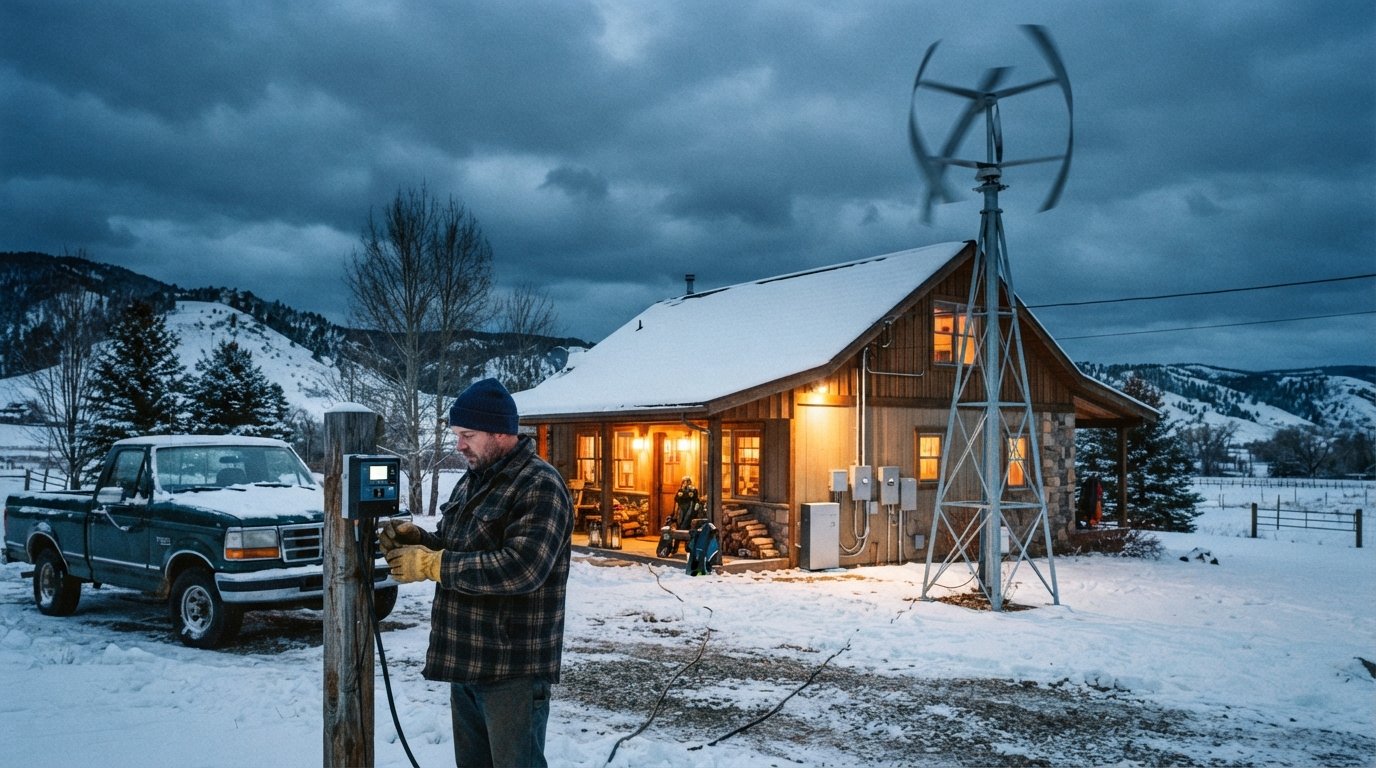
Imagine a winter storm knocking out regional power lines for a week, yet your lights stay on, your refrigerator keeps humming, and your well pump keeps running. For many homeowners and small businesses, that resilience is the core appeal of off-grid living. While solar panels often dominate the conversation, home wind turbines can be the perfect partner, especially in locations with consistent wind. They generate power at night, during cloudy stretches, and in the heart of winter when the sun sits low. This guide walks through the best home wind turbines for off-grid living, what makes them effective, and how to match a turbine to your property without wasting money.
Choosing the right turbine is not about picking the most powerful model on paper. It is about matching the machine to your wind resource, your energy consumption, and your tolerance for maintenance. The best home wind turbines for off-grid living in 2026 balance durability, real-world output, and quiet operation. They also need to integrate smoothly with battery banks and inverters, which are often already installed in solar-plus-storage systems. Before you buy, you need to understand the basics of wind energy math, tower height, and the difference between rated power and actual daily yield.
Why Wind Turbines Make Sense for Off-Grid Power
Solar energy is predictable on a seasonal scale, but it suffers from nightly gaps and weather variability. Wind energy complements solar because it often peaks during the exact times when solar drops off. In many regions, wind speeds increase in the late afternoon, evening, and during winter months, which aligns with higher household electricity demand. For an off-grid system, adding a wind turbine can mean a smaller battery bank, fewer generator run hours, and less anxiety during long stretches of gray skies.
Wind turbines also have a smaller physical footprint than a ground-mounted solar array for the same annual output. A single 1.5 kW turbine can generate 300 to 500 kWh per month in a good wind site, which is comparable to a 3 to 4 kW solar array in a sunny state. That compactness matters for rural properties with limited open land. However, wind is not a universal solution. If you live in a wooded valley with average wind speeds below 8 mph, a turbine will likely produce disappointing results. In that case, adding a few extra solar panels and a larger battery is a better investment.
When you evaluate turbines, you should look beyond the shiny marketing numbers. The most honest metric is the power curve, which shows output at different wind speeds. Manufacturers often quote the cut-in speed, the speed at which blades start turning, and the rated speed, the speed at which they hit their maximum output. A quality turbine should show meaningful generation at 10 to 12 mph, not just at 25 mph. You can estimate your site's wind speed using online tools or a portable anemometer installed on a temporary mast for a few months.
Key Criteria for Selecting an Off-Grid Turbine
Before diving into specific models, it helps to define the criteria that separate a reliable off-grid workhorse from a decorative windmill. The best home wind turbines for off-grid living share several common traits: corrosion-resistant materials, sealed bearings, brushless generators, and a proven track record in real installations. They also have a controller that prevents overcharging and a furling or braking mechanism to handle storm winds.
You also need to think about tower height. Wind speed increases with altitude, and the difference between a 30-foot tower and an 80-foot tower can double your energy production. Turbines mounted on rooftops are almost always a bad idea because they vibrate, cause noise, and perform poorly in the turbulent air near the roofline. For off-grid homes, a tilt-up tower with guy wires is the most common and cost-effective solution. This tower design allows you to raise and lower the turbine for maintenance without climbing a permanent lattice structure.
Here are the critical specifications to compare before you make a purchase:
- Rated power output (typically 1 kW to 10 kW for homes) versus actual annual energy production at your average wind speed.
- Cut-in speed and rated wind speed: lower numbers are better for moderate wind sites.
- Voltage compatibility with your battery bank (12V, 24V, or 48V) and inverter.
- Blade material and generator type: carbon fiber and direct-drive permanent magnet alternators are the gold standard.
- Noise rating (decibels at 20 feet) and vibration isolation features.
- Warranty length and availability of spare parts in the United States.
These factors matter more than the manufacturer's claimed maximum output, which often occurs at wind speeds you will rarely see. A turbine that reliably produces 200 kWh per month at your site is far more valuable than one that is rated 3 kW but only spins efficiently in a hurricane.
Top Turbine Models for Off-Grid Homes in 2026
After analyzing the market, user reports, and independent tests, the following models stand out as the best home wind turbines for off-grid living. They cover a range of budgets and energy needs, from small cabins to full-time rural homes.
1. Primus Air 40 (400W) for Small Cabins and RVs
The Primus Air 40 has been a staple in the off-grid world for over a decade. It is a 400-watt turbine designed for 12-volt or 24-volt battery systems. Its small size makes it suitable for cabins, tiny houses, boats, and RV trailers. The Air 40 features a three-blade design with a proprietary airfoil that operates quietly. It starts producing power at wind speeds around 6 mph, which is lower than many competitors, making it a decent choice for moderate wind sites.
That said, the Air 40's actual output in a typical 10 mph breeze is modest, usually around 50 to 80 watts. For a cabin that only needs to keep a few lights and a laptop charged, that is acceptable. For a full-time residence, you would need multiple units or a larger turbine. The plastic blades are durable but can be noisy in gusty conditions. The internal controller handles regulation, but you will still need a separate charge controller if your battery bank is 24 volts.
2. Bergey Excel 10 (10 kW) for Full-Time Rural Homes
At the high end of the residential market, the Bergey Excel 10 is a legend for reliability. It is a 10-kilowatt machine that has been installed across thousands of farms and rural homes since the 1980s. The Excel 10 uses a permanent magnet alternator and passive furling to protect itself in high winds. It is designed for tower heights of 60 to 120 feet, which are necessary to reach the smooth wind layer. This turbine can generate 1,000 to 2,000 kWh per month in a site with average wind speeds of 12 mph.
The Excel 10 connects to a 48-volt battery bank, which is the standard for serious off-grid systems. It includes a digital controller that handles battery charging and diversion loads. The trade-off is cost: the turbine alone is often priced near $30,000, plus tower and installation. That makes it a major capital investment, but for a home that currently pays $300 per month for electricity, the payback period can be reasonable, especially if you qualify for the federal Investment Tax Credit for wind energy.
3. Missouri Wind and Solar Freedom II (1 kW) for DIY Enthusiasts
If you are comfortable with basic electrical work and want a budget-friendly option, the Missouri Wind and Solar Freedom II kit deserves attention. This 1 kW turbine is sold as a DIY kit that you assemble yourself. It uses a hub with three blades and a permanent magnet alternator. The company provides clear instructions, and you can choose from various voltage options for your battery bank. The kit does not include a tower, so you will need to build a tilt-up tower or mount it on an existing structure.
In a 12 mph wind, the Freedom II can produce around 300 to 400 watts, which is respectable for the price. The kit's main downside is that it requires more maintenance than a premium turbine, such as periodic blade tightening and bearing lubrication. However, for a weekend cabin or a supplemental power source, it offers one of the best value propositions. Many owners run two Freedom II turbines on separate towers to balance output against variable wind directions.
4. Windspot 3.5 kW for Medium-Sized Homes
The Windspot 3.5 kW, made in Spain, is a popular choice for homes that need more than 1 kW but less than 10 kW. It features a sleek, low-vibration design with a permanent magnet synchronous generator. The turbine has no gearbox, which reduces wear and maintenance. It is available in 24V, 48V, and grid-tie configurations. The 48V version integrates easily with common off-grid battery systems.
Windspot rates the turbine for some of the highest continuous output in its class. At a 15 mph average wind speed, it can generate around 600 to 800 kWh per month. The company offers a five-year warranty, and spare parts are available from U.S. distributors. The main challenge is that the Windspot is heavier than comparable turbines, requiring a sturdier tower. You should also factor in shipping costs from the distributor, which can be significant.
How to Pair a Wind Turbine with Solar and Batteries
Most off-grid households do not rely solely on wind. A hybrid system that combines solar panels, a wind turbine, and battery storage provides the best balance of reliability and cost. The key is to size the turbine so that it does not overcharge the battery bank during long windy periods, which can happen if the turbine is oversized. A good rule of thumb is to keep the turbine's rated power below 50% of the battery bank's C-rate, meaning a 1 kW turbine should not be paired with a battery bank smaller than 200 amp-hours at 48 volts.
You will need a hybrid charge controller that can accept inputs from both the solar array and the wind turbine, or you can use separate controllers and combine the DC outputs at the battery bus. Many modern inverters, such as the Magnum or Victron models, have built-in auxiliary inputs for wind turbines. If you are planning a new system, it is wise to design the battery bank and charge controllers with the wind turbine in mind from the start. Adding a wind turbine later to an existing solar system often requires a separate charge controller and additional wiring, which can be messy.
For those who are still deciding between solar and wind, our comparison of wind vs solar for homes offers a detailed cost and performance breakdown. It explains why a combination often wins for off-grid applications, even if solar is the primary source.
Installation and Maintenance Considerations
Proper installation is the difference between a turbine that lasts 20 years and one that fails in five. Hiring a professional installer with experience in wind energy is strongly recommended, especially for towers taller than 60 feet. A poorly guyed tower can collapse in a storm, and an improperly wired turbine can damage your batteries or inverter. Even if you are handy, you should have an electrician review the wiring and grounding plan.
Routine maintenance is straightforward but essential. Every six months, inspect the blades for cracks or erosion, check the bolts for tightness, and lubricate the yaw bearing. On an annual basis, you should measure the resistance of the stator windings to ensure the generator is healthy. Most turbines require a brake or furling test to confirm they will stop safely in high winds. With proper care, a quality turbine can produce clean energy for decades.
You should also consider the noise and visual impact. While modern turbines are much quieter than older models, the sound of the blades swishing can be noticeable within 200 feet. If you have close neighbors, consult them early and check local zoning regulations. Many jurisdictions have limits on tower height and require a setback from property lines.
Financial Incentives and ROI for Home Wind
The federal Investment Tax Credit (ITC) covers 30% of the total installed cost of a residential wind turbine through 2032. Some states offer additional rebates or performance-based incentives. For example, Massachusetts and New York have programs that reduce the upfront cost by 20% to 30%. These incentives can make a meaningful difference in your payback period.
To estimate your return on investment, calculate your average monthly electricity consumption in kWh, then multiply your site's average wind speed by the turbine's power curve to estimate monthly production. Multiply that by your local electricity rate, which is often $0.15 to $0.30 per kWh, and you have your monthly savings. A turbine that produces 500 kWh per month at $0.20 per kWh saves $100 monthly, or $1,200 annually. Over a 20-year lifespan, that is $24,000 in savings, not counting rising utility rates.
For a precise estimate, use an online wind energy calculator that factors in turbine specifications, tower height, and your location. You can also request a professional site assessment from a wind installer. While that assessment costs a few hundred dollars, it can prevent you from making a costly mistake. For more advanced planning, tools like SolarEnergy.ai offer simulation software that models hybrid solar and wind systems, helping you optimize the mix for your property.
Making the Final Choice
The best home wind turbines for off-grid living ultimately come down to your energy needs, wind resource, and budget. If you have a reliable breeze and are willing to invest in a proper tower, a turbine like the Bergey Excel 10 or Windspot 3.5 kW can provide a substantial portion of your electricity for decades. If you are just starting out with a small cabin, the Primus Air 40 or Missouri Wind and Solar kit can get you off the grid for under $1,000.
Remember that no single turbine is right for everyone. Start by measuring your site's wind, review your utility bills to understand your true consumption, and consider how a turbine will integrate with your existing solar and battery equipment. Then, request quotes from multiple installers and ask for references from off-grid customers in your region. With the right machine, you can enjoy the freedom of reliable, clean power, no matter what the grid does.
As you plan your off-grid energy system, keep in mind that wind and solar are complementary, not competitive. The best systems embrace both, and the turbine you choose today will be a cornerstone of your energy independence for years to come.